The signs of Sadu
About Sadu, and our respect for the craft
Al Sadu is one of the oldest weaving crafts of the Arabian Peninsula. Bedouin women weave it on a ground loom and pass the skill down within the family, and UNESCO names "older Bedouin women who are master weavers" as its main bearers. Traditional weaving of Al Sadu was inscribed on UNESCO's Representative List of the Intangible Cultural Heritage of Humanity in 2020 for Saudi Arabia and Kuwait, and the inscription was extended to Qatar in 2025.
Sadu by miniblank does not weave Sadu and claims no ownership of its motifs. We draw our own original embroidery designs, inspired by documented Sadu motifs such as triangles, diamonds and lines, and each piece carries the meaning of the motif that inspired it, with its source. We never copy woven pieces, never use tribal wasm or tribe names, and never alter the motifs in a way that lessens their value or changes their meaning. Our work is a tribute to Al Sadu and the women who have kept it alive. If you want a handwoven Sadu piece, we hope you buy it from the weavers themselves.
The signs and their meanings
Every sign in Sadu is a word. Here is every sign we embroider, with its meaning, its source and the pieces that carry it.
Meanings in Sadu vary from weaver to weaver and place to place, so we write "is said to" and name the source. Where no source gives a meaning, we give our own and call it "our reading". If you know another telling, we would love to hear it at sadu@miniblank.com.
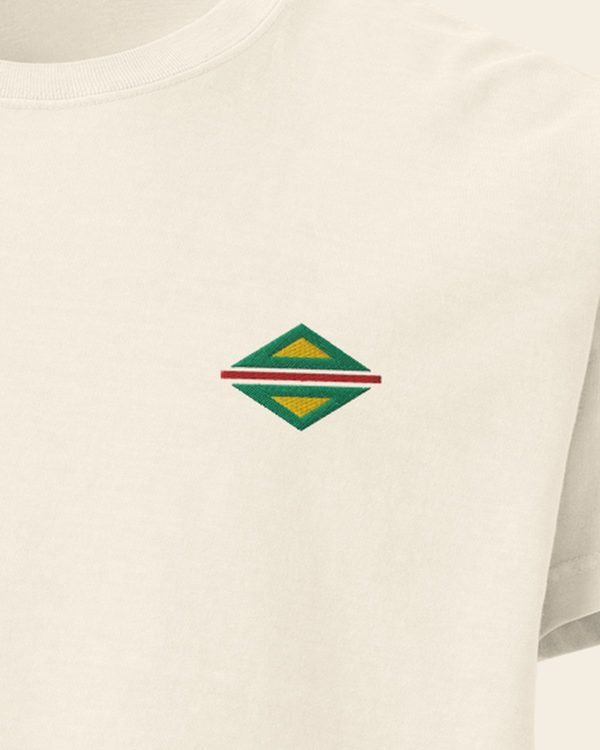
Al-Mithkharالمذخر
Said to be the flowering plant: two triangles meeting on one base.
Sources: Al-Najada, Folk Culture
Pieces: Mithkhar Tee, Mithkhar Corduroy Cap
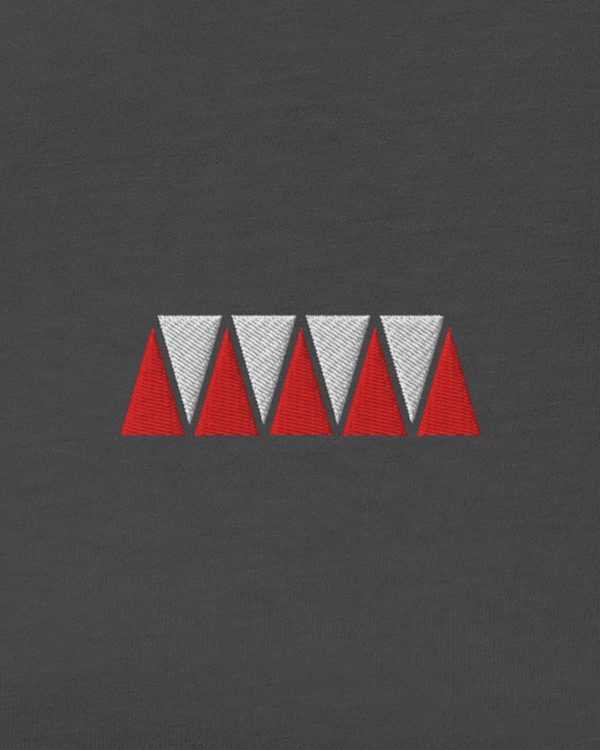
Al-Uwairjanالعويرجان
A chain of red and white triangles, said to mean loftiness; some say dunes, piles of dates or birds' wings.
Sources: Al-Najada, Folk Culture; Canavan, 2011; Encyclopedia of Crafts
Pieces: Uwairjan Oversized Tee, Uwairjan Beanie
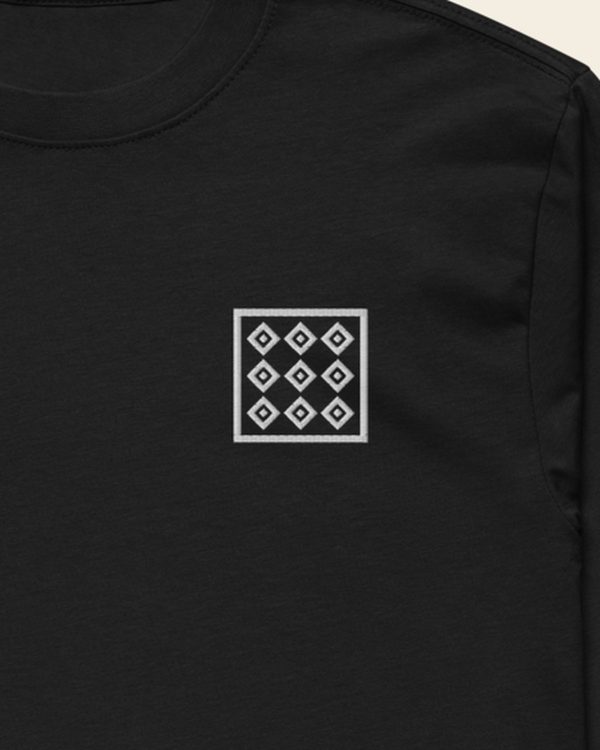
Al-Ainالعين
White dots in the black, like eyes looking out of the dark.
Sources: Al-Najada, Folk Culture; Al Rai, 2012; Encyclopedia of Crafts
Pieces: Ain Long Sleeve, Ain Rope Cap
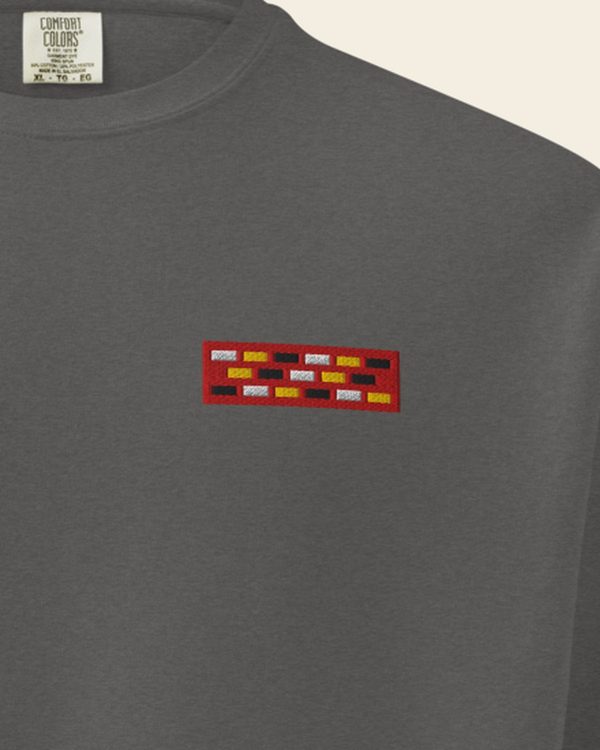
Al-Hububالحبوب
Short alternating dashes on the edge, said to be dried grains: rice, barley, wheat.
Sources: Al-Najada, Folk Culture; Abu Dhabi Culture, 2022; Encyclopedia of Crafts
Pieces: Hubub Crewneck
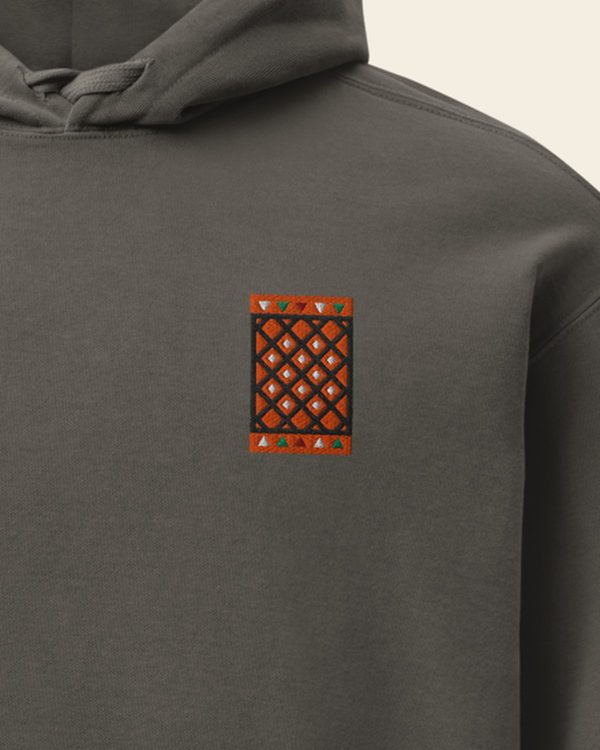
Al-Shajarahالشجرة
The tree field is the heart of Sadu, where the weaver places her own signs; the one who masters it earns a title.
Sources: Al-Najada, Folk Culture; Al-Jazirah, 2008; AramcoWorld
Pieces: Shajarah Hoodie
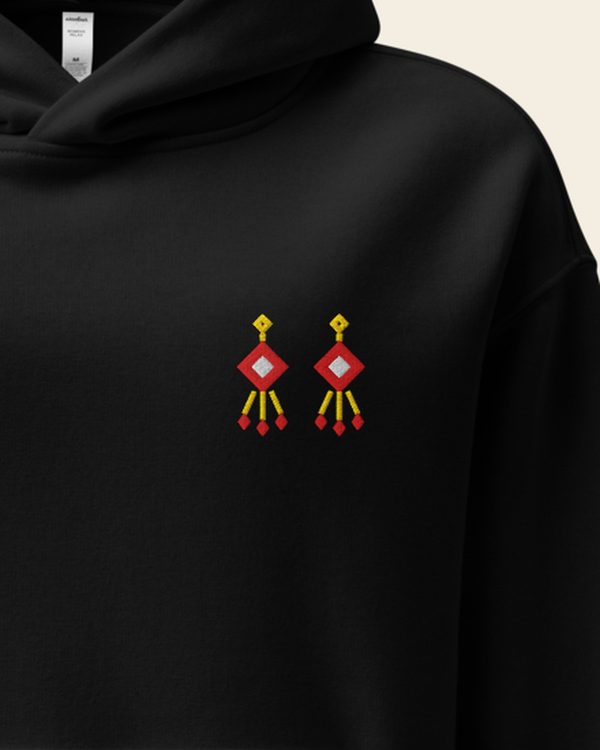
Al-Tarajiالتراجي
Al-Taraji are earrings; a woman's jewellery told of her standing.
Sources: Al-Najada, Folk Culture; Al-Ogayyel and Oskay, Brill; Canavan, 2011
Pieces: Taraji Women's Hoodie
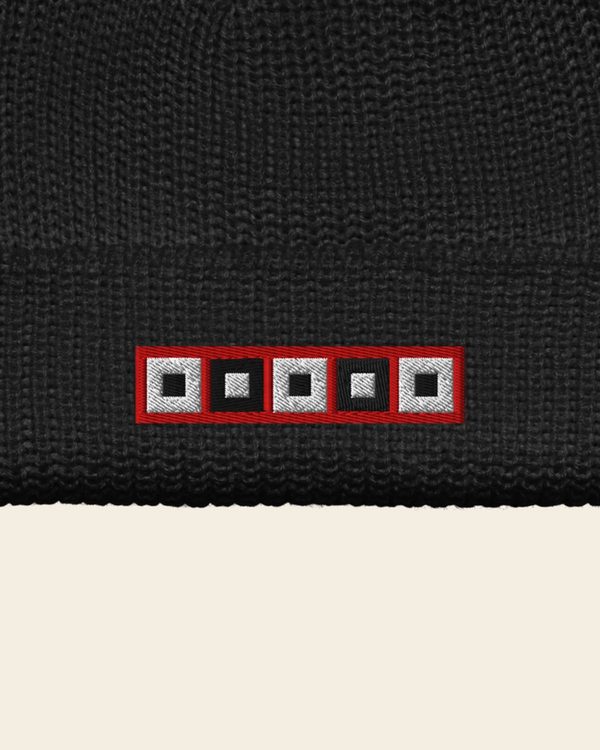
Dhurus Al-Khailضروس الخيل
Two-colour squares, said to be horses' molars.
Sources: Al-Najada, Folk Culture; Abu Dhabi Culture, 2022
Pieces: Dhurus Beanie
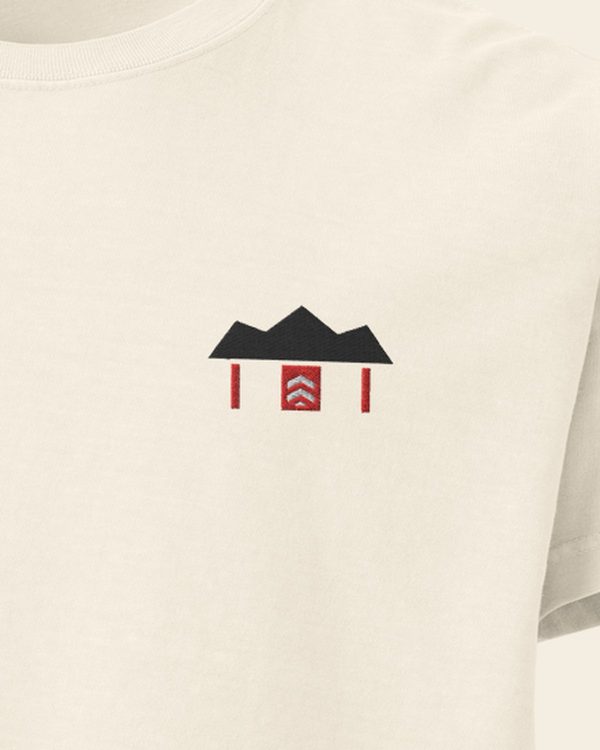
Bayt Al-Sha'arبيت الشعر
The black tent is the largest and most important thing made of Sadu, and the first thing Sadu was made for.
Sources: Al-Najada, Folk Culture; Al Rai, 2012
Pieces: Black Tent Tee
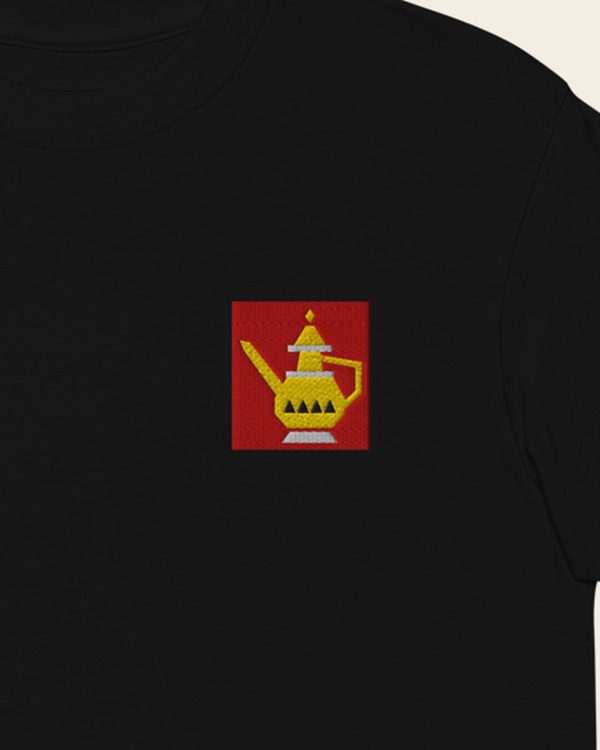
Al-Dallaالدلة
The coffee pot is one of the tree's signs. Our reading: generosity.
Sources: Abu Dhabi Culture, 2022; Canavan, 2011; Al Bayan
Pieces: Coffee Pot Tee
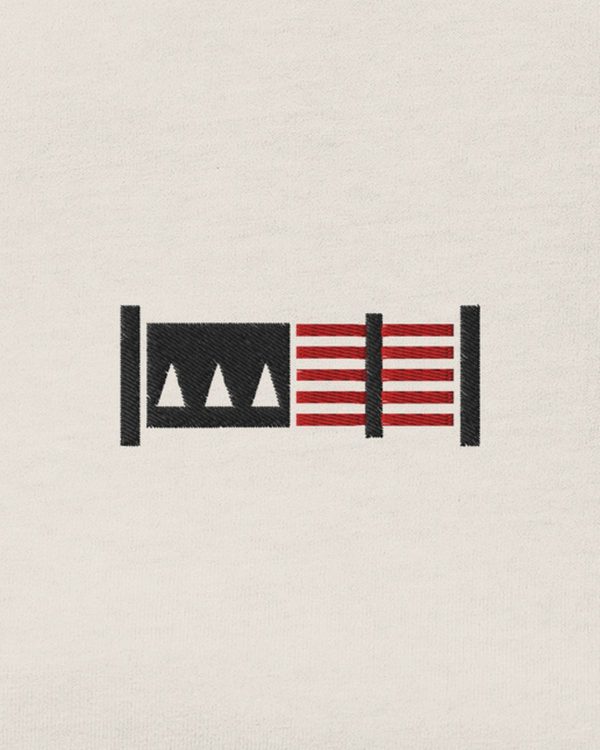
Al-Noolالنول
The ground loom, called النول, النطو or المطراحة.
Sources: Al Riyadh, 2019; AramcoWorld
Pieces: Loom Oversized Tee
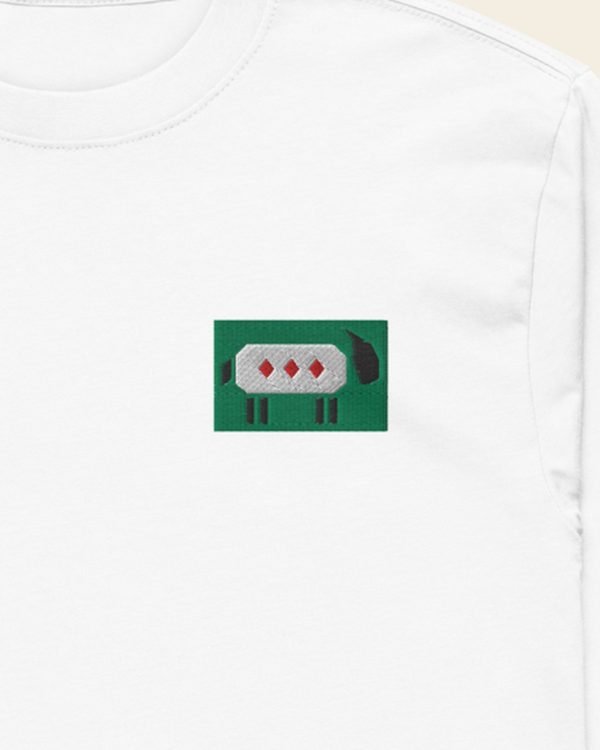
Al-Ghanamالغنم
Sheep are among Sadu's signs; the weaving starts with their wool. Our reading: beginnings.
Sources: Abu Dhabi Culture, 2022
Pieces: Sheep Long Sleeve
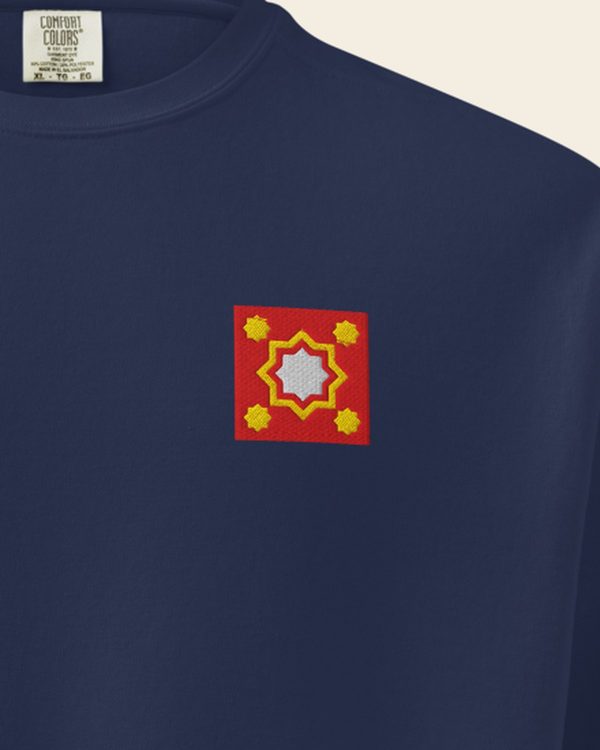
Al-Nujumالنجوم
Stars in Sadu are said to mark time, weather and the way.
Sources: Al-Ogayyel and Oskay, Brill
Pieces: Stars Crewneck, Stars Women's Hoodie
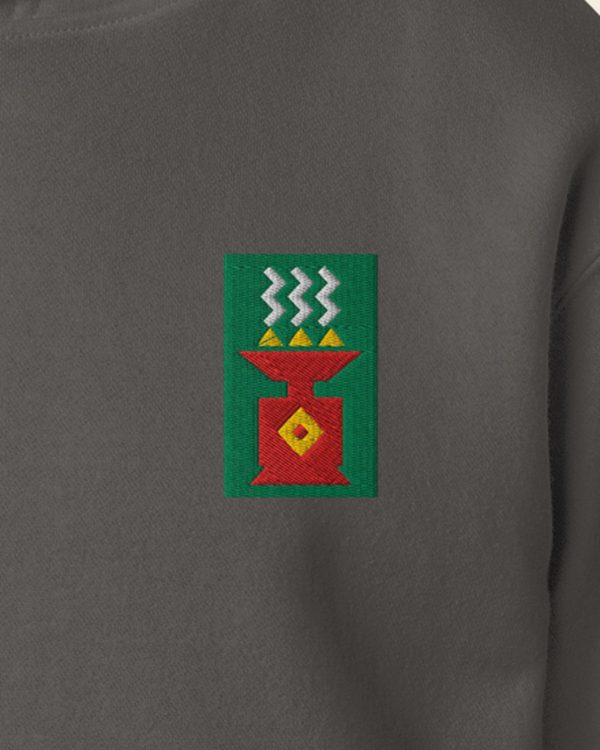
Al-Mabkharaالمبخرة
The incense burner is one of the tree's signs. Our reading: welcome.
Sources: Al Bayan
Pieces: Incense Burner Hoodie
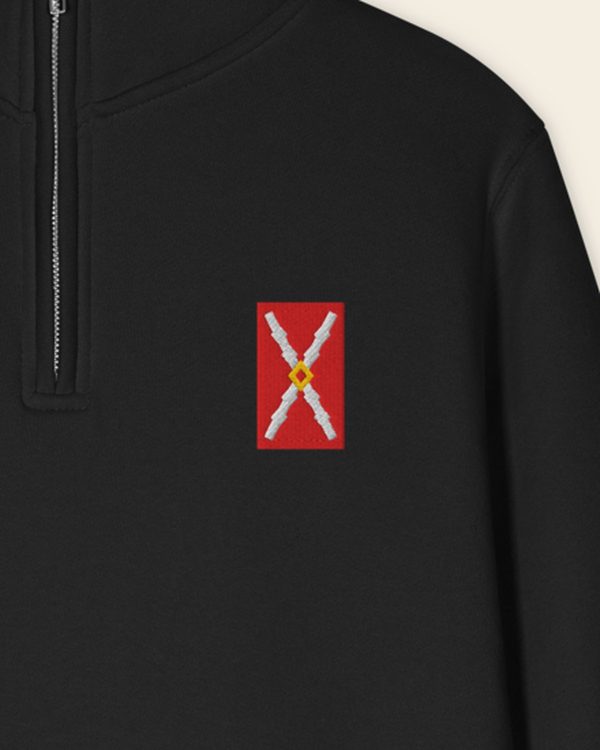
Al-Mighzalالمغزل
The spindle spins the wool before it becomes Sadu. Our reading: the yarn before the cloth.
Sources: Al Riyadh, 2019
Pieces: Spindle Quarter Zip, Spindle Crewneck
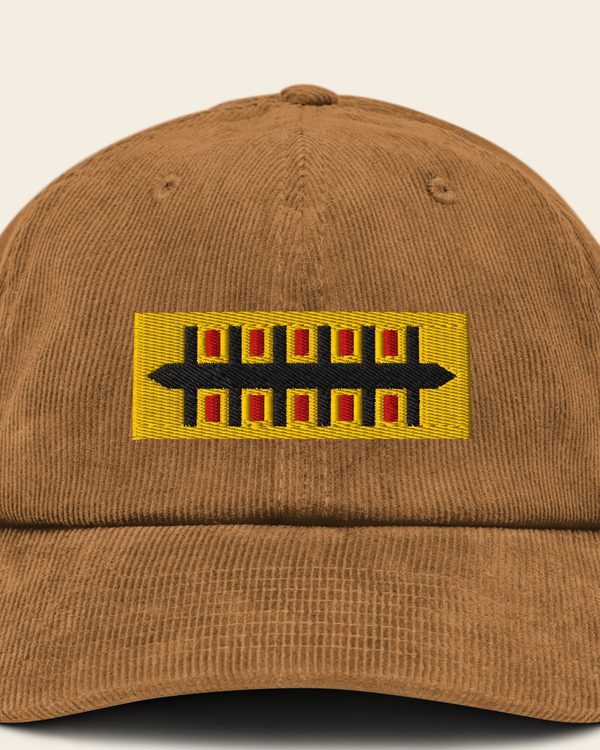
Al-Mushtالمشط
Alternating stripes like the teeth of a comb.
Sources: Al-Najada, Folk Culture; Emarat Al Youm
Pieces: Comb Corduroy Cap
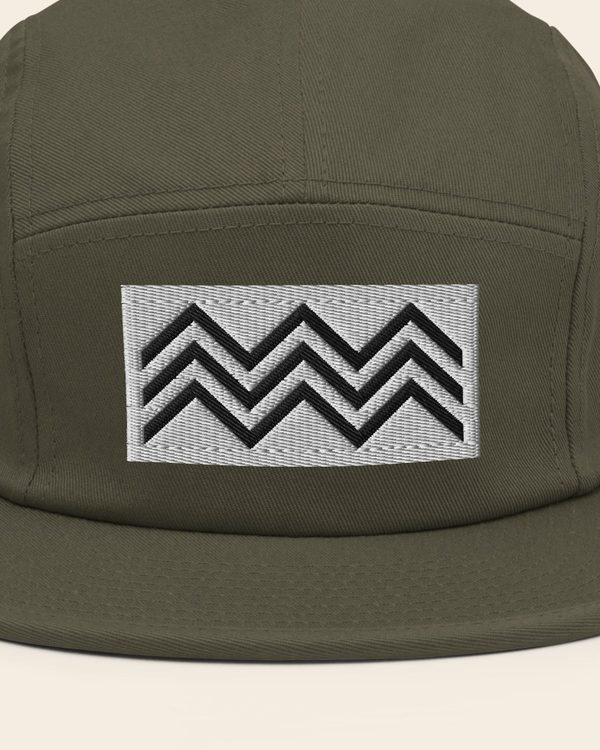
Darb Al-Hayyaدرب الحية
A zigzag, said to be a snake's path in the sand.
Sources: Canavan, 2011; Al-Ogayyel and Oskay, Brill; Emarat Al Youm
Pieces: Snake Path Five-Panel, Snake Path Visor
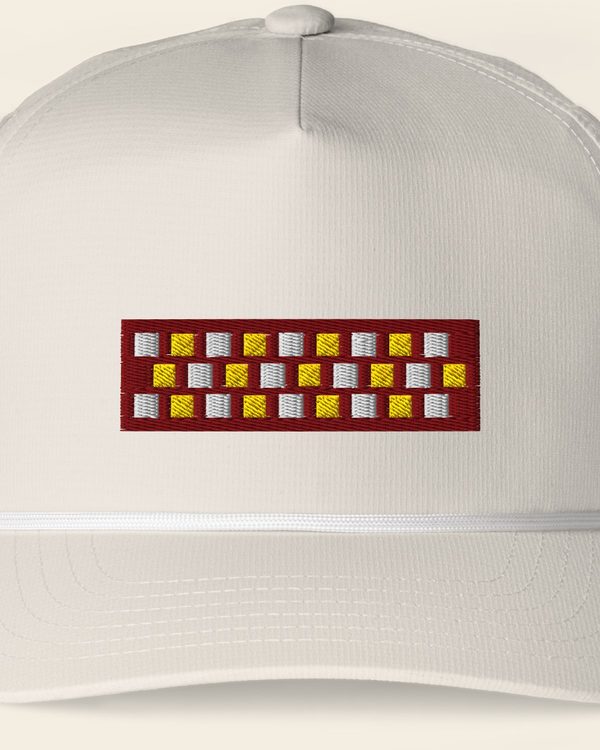
Al-Numaylaالنميلة
A small check called al-numayla, the little ants.
Sources: AramcoWorld, 1988
Pieces: Little Ants Rope Cap
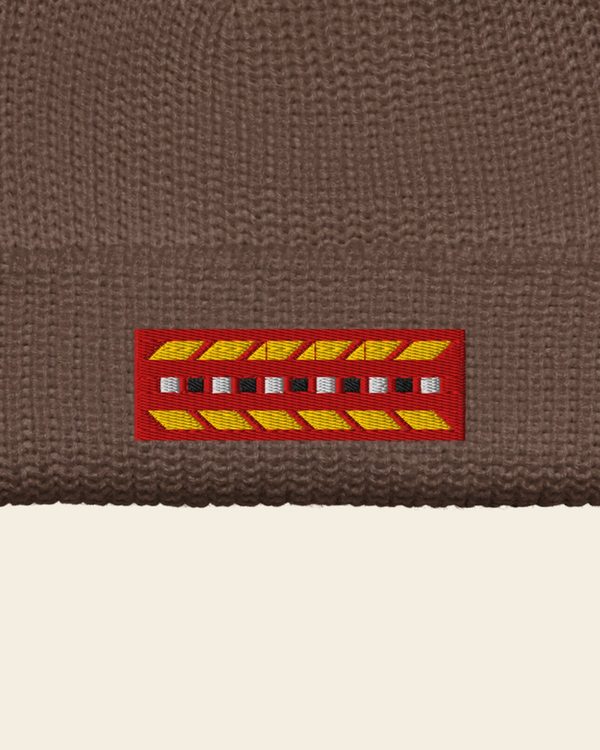
Al-Dhal'aالضلعة
Longer dashes in a third colour, named for the shape of the ribs.
Sources: Al-Najada, Folk Culture; Al Rai, 2012; Abu Dhabi Culture, 2022
Pieces: Ribs Beanie
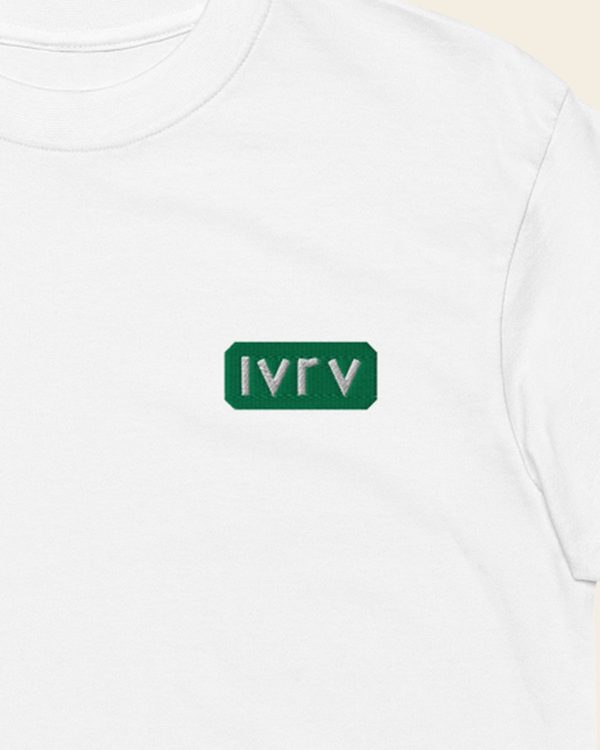
Al-Tawarikhالتواريخ
Weavers wove dates to remember an event; we stitch the founding year, 1727.
Sources: Abu Dhabi Culture, 2022; Al-Ogayyel and Oskay, Brill
Pieces: Dates 1727 Tee
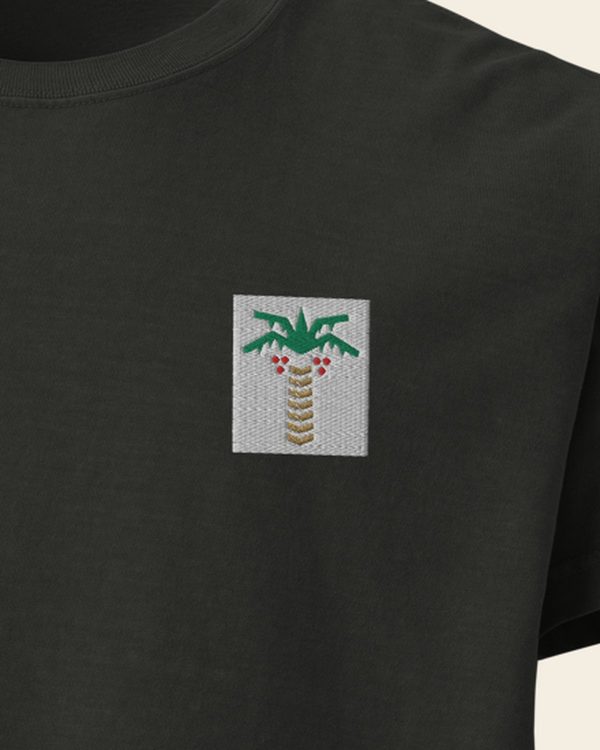
Al-Nakhlaالنخلة
The palm is one of Sadu's signs. Our reading: shade and plenty.
Sources: Abu Dhabi Culture, 2022
Pieces: Palm Tee
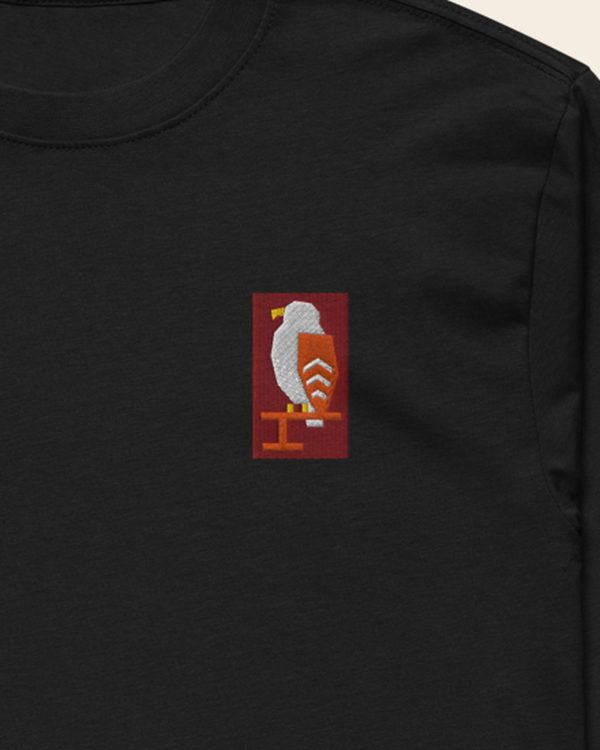
Al-Saqrالصقر
The falcon is one of Sadu's signs. Our reading: patience.
Sources: Abu Dhabi Culture, 2022
Pieces: Falcon Long Sleeve
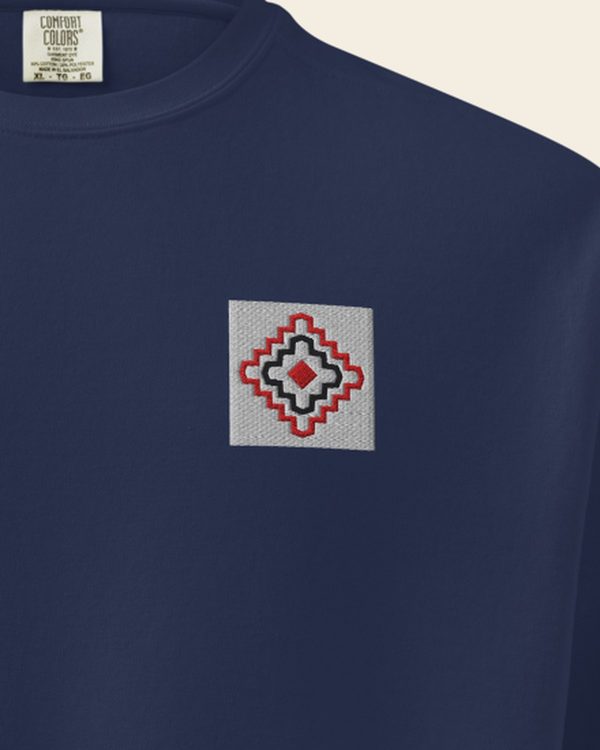
Ain Al-Ghadirعين الغدير
Diamonds inside diamonds, said to be a water pond drying in the sun.
Sources: Canavan, 2011; Al-Ogayyel and Oskay, Brill; Abu Dhabi Culture, 2022
Pieces: Water Pond Crewneck, Water Pond Bucket Hat
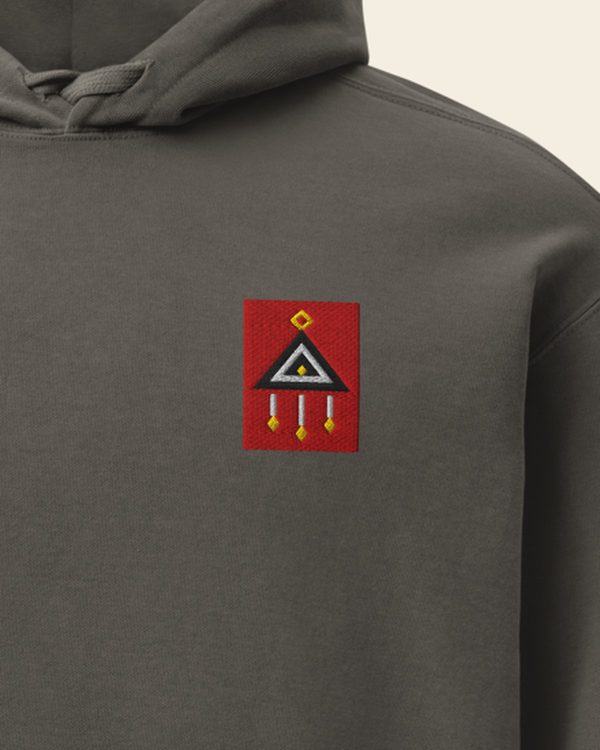
Al-Hirzالحرز
The amulet is one of the tree's signs; the triangle is said to protect.
Sources: Al-Najada, Folk Culture
Pieces: Amulet Hoodie
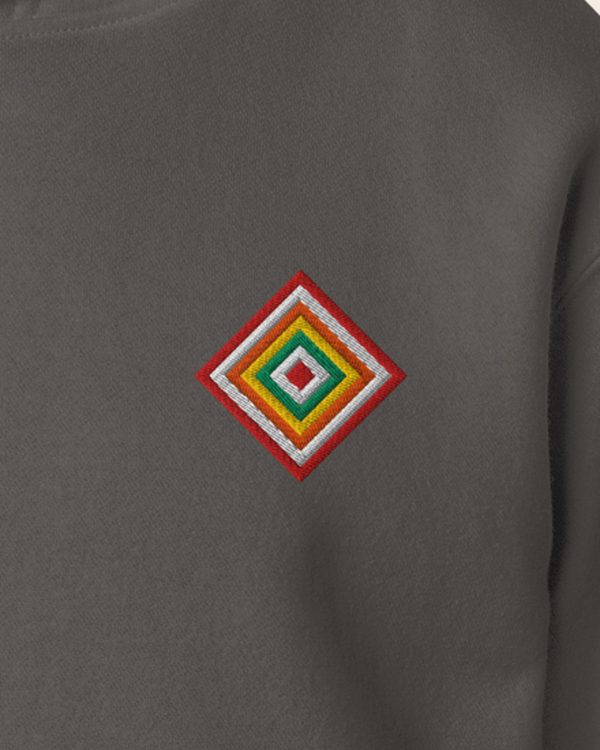
Al-Hanbaliyyaالحنبلية
A great diamond of five or more colours, rare because it takes so long to weave.
The sources record no meaning for it, so we give only its name and description.
Sources: Al-Najada, Folk Culture
Pieces: Hanbaliyya Hoodie
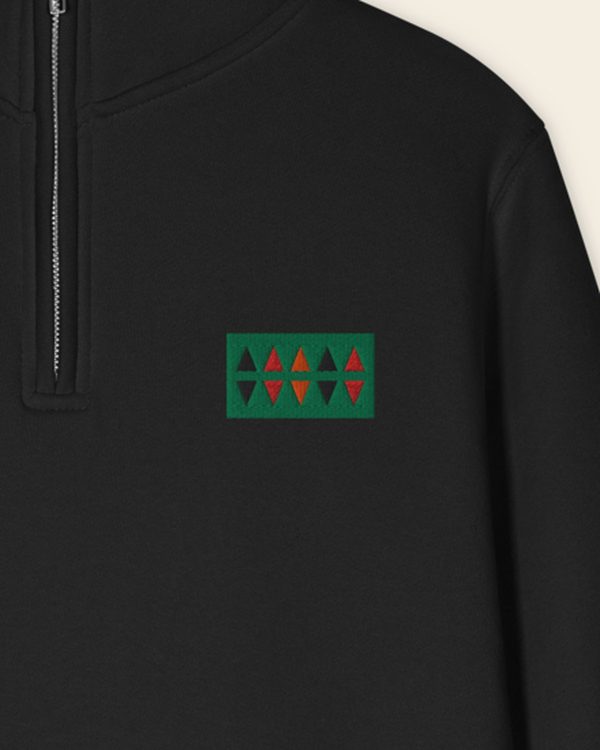
Al-Junuh Al-Hanbaliyyaالجنح الحنبلية
Triangles whose colours repeat in a set order.
The sources record no meaning for it, so we give only its name and description.
Sources: Al-Najada, Folk Culture
Pieces: Junuh Quarter Zip
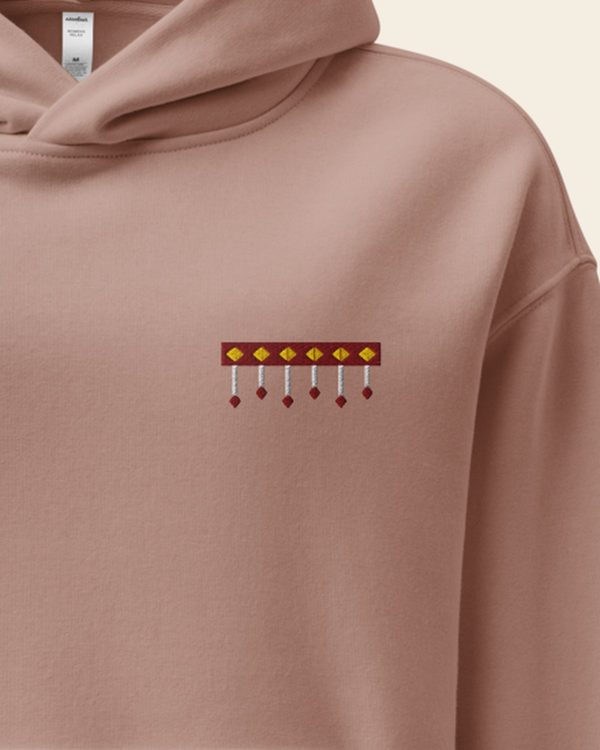
Al-Safayefالسفايف
Al-Safayef are Sadu bands that adorn camels and horses.
Sources: Al Rai, 2012
Pieces: Safayef Women's Hoodie, Safayef Five-Panel
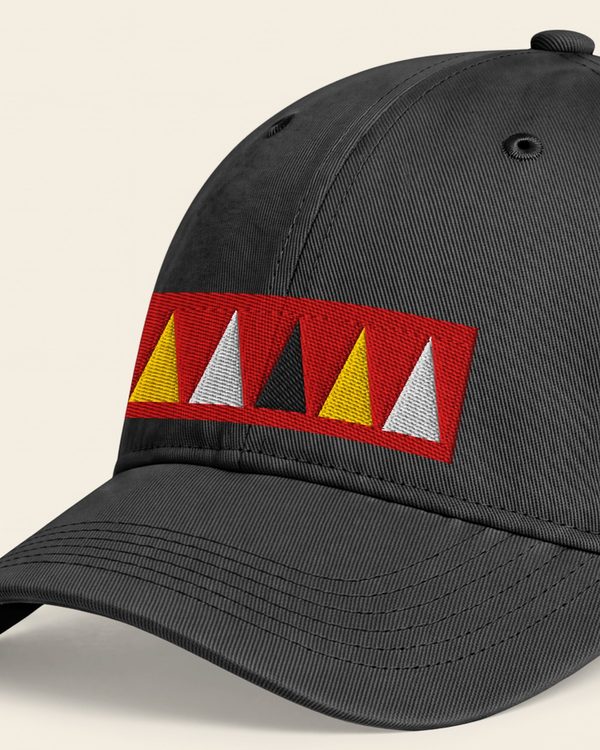
Al-Raqmالرقم
Coloured triangles where the weft wraps the warp; the name is said to come from covering.
Sources: Al-Najada, Folk Culture; Al-Jazirah, 2008; Al Rai, 2012
Pieces: Raqm Washed Cap
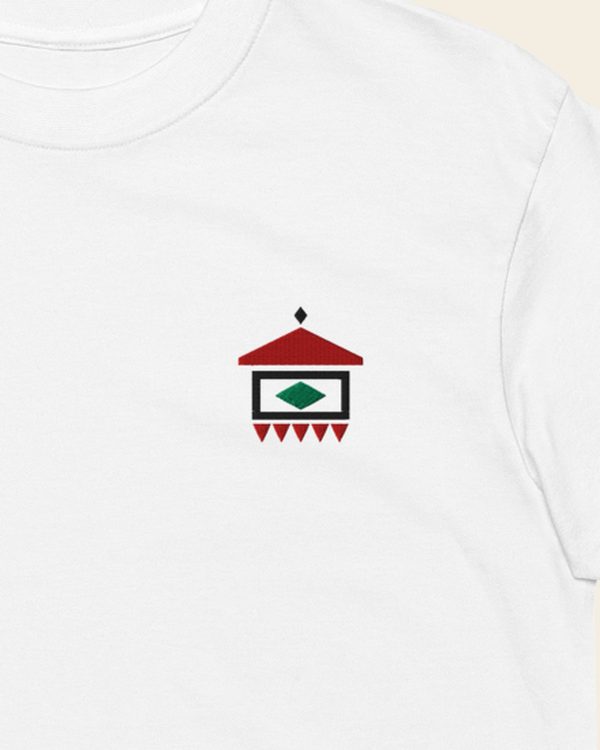
Al-Hawdajالهودج
The camel litter is one of the tree's signs. Our reading: the journey.
Sources: Al-Najada, Folk Culture; Canavan, 2011
Pieces: Camel Litter Tee
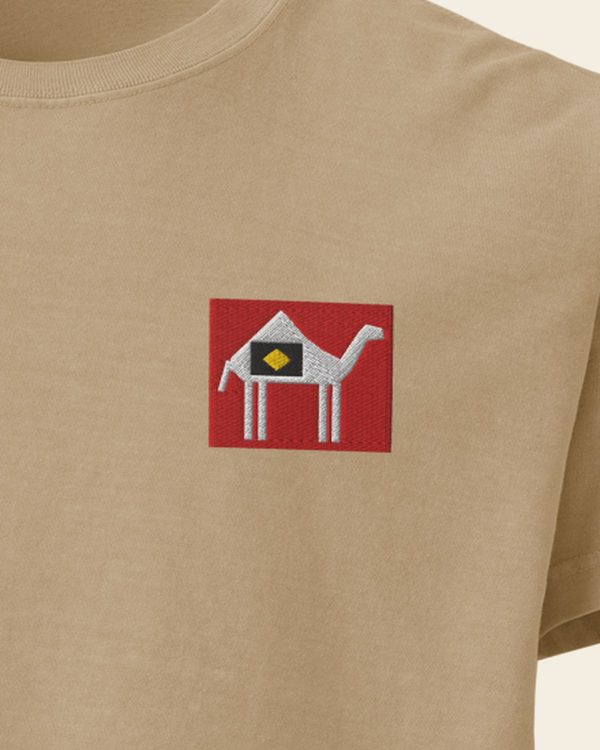
Al-Jamalالجمل
The camel is one of the tree's signs, drawn geometric as the weavers wove it.
Sources: Al-Najada, Folk Culture; Canavan, 2011
Pieces: Camel Tee
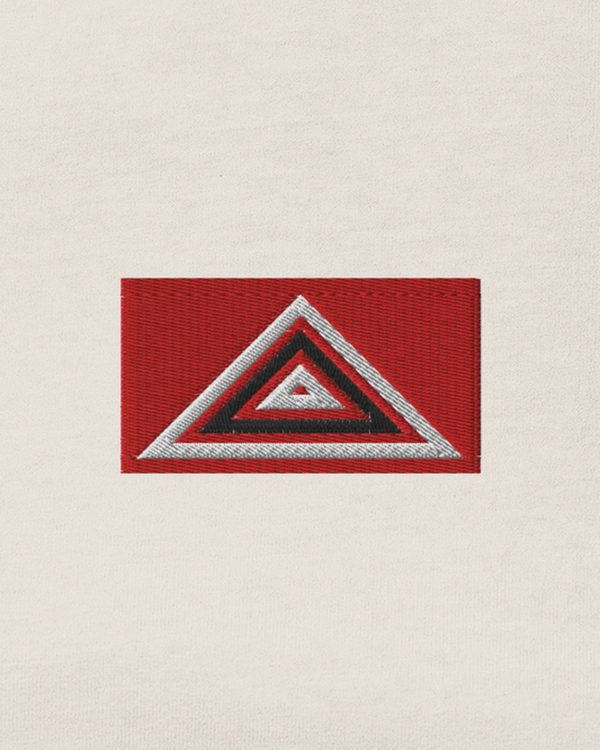
Al-Hijabالحجاب
Some Bedouin call the triangle al-hijab, said to protect.
Sources: Al-Jazirah, 2008
Pieces: Hijab Triangle Oversized Tee
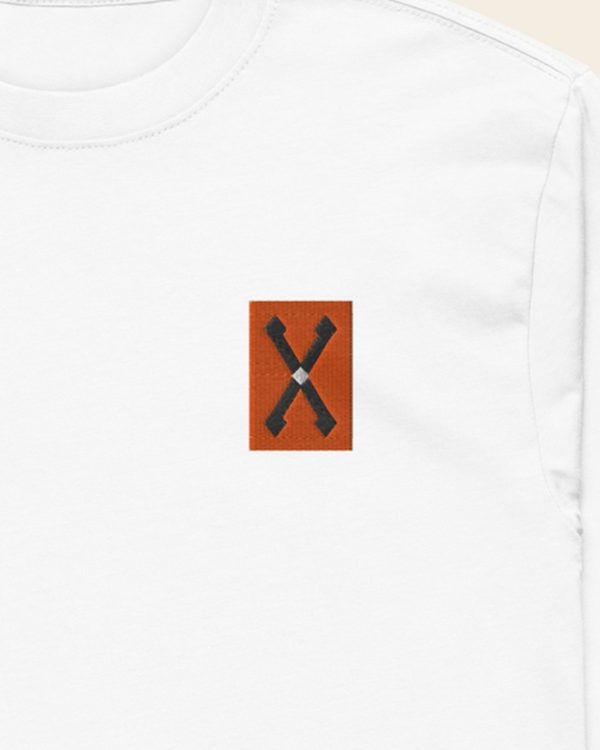
Al-Miqassالمقص
Scissors: one of the new things Bedouin met in travel and trade.
Sources: Al Bayan; Abu Dhabi Culture, 2022; Al-Ogayyel and Oskay, Brill
Pieces: Scissors Long Sleeve
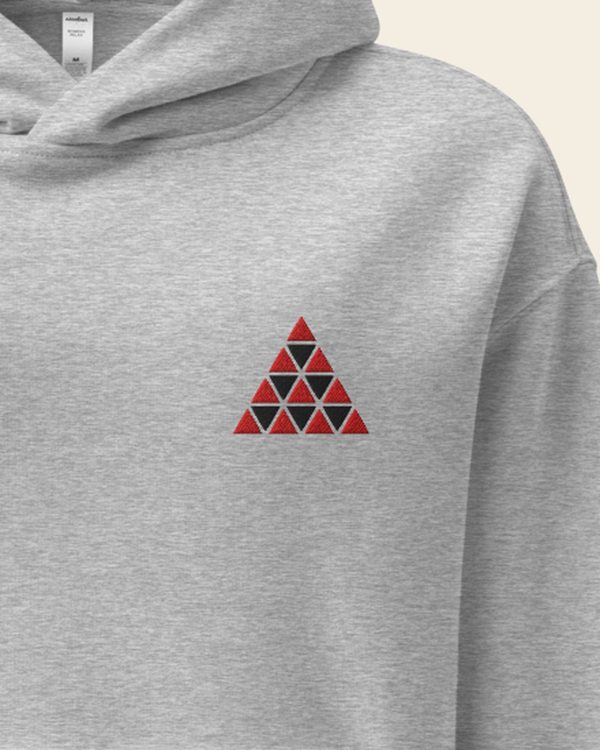
Al-Muthallathالمثلث
The triangle builds most Sadu patterns and is said to mean loftiness.
Sources: Al-Jazirah, 2008
Pieces: Triangle Women's Hoodie
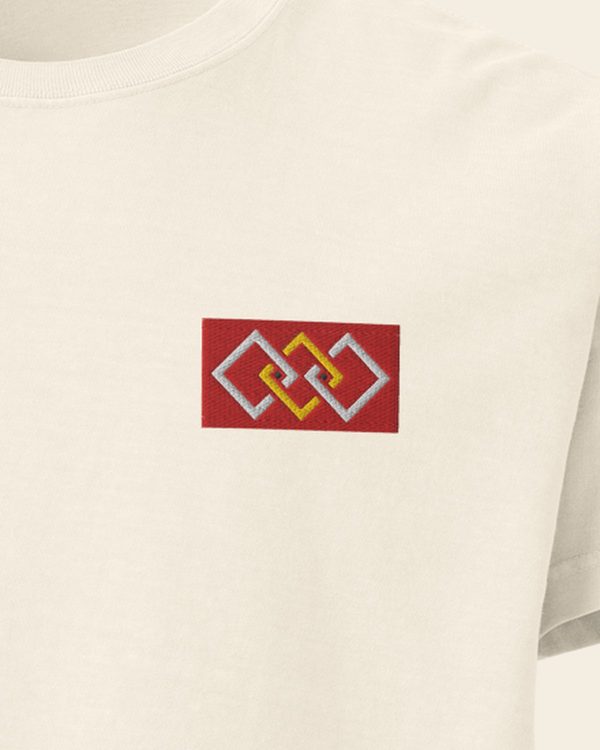
Al-Qiladaالقلادة
The chain of interlocking rings is said to stand for unity and cohesion.
Sources: Abu Dhabi Culture, 2022
Pieces: Chain Tee, Chain Oversized Tee, Chain Hoodie, Chain Washed Cap
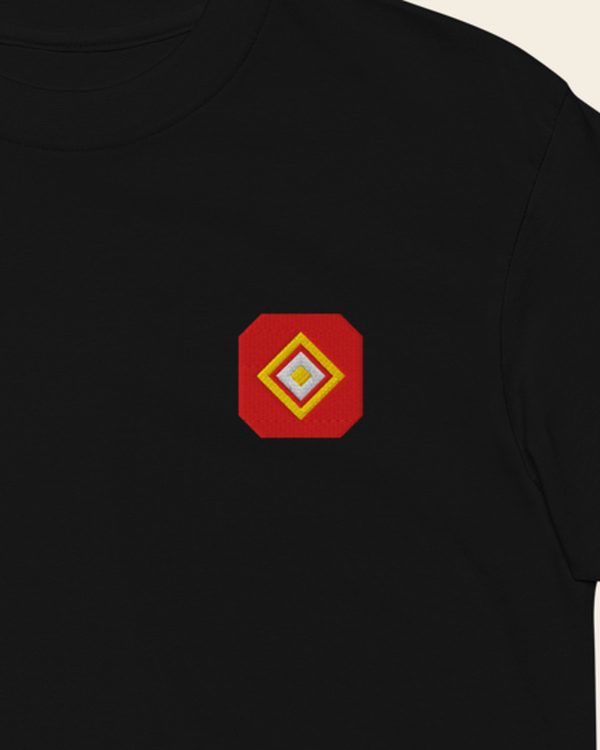
Al-Wasmالوسم
The wasm is said to be an old mark of belonging and ownership, which a weaver sometimes wove in like a signature. Ours is a Sadu-inspired diamond we drew ourselves, not any tribe's mark.
Sources: Al-Najada, Folk Culture; Canavan, 2011; Al-Ogayyel and Oskay, Brill
Pieces: Wasm Tee, Wasm Beanie
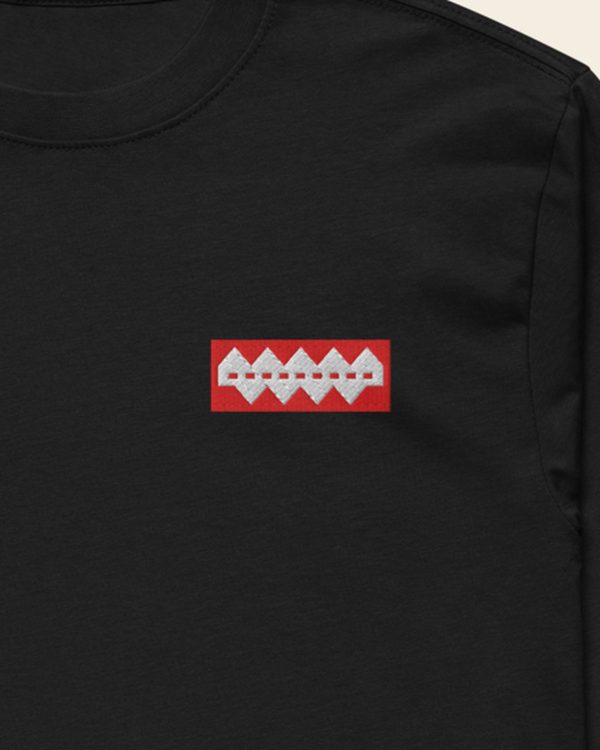
Al-Sinunالسنون
A toothed edge called al-sinun, the teeth.
Sources: AramcoWorld, 1988
Pieces: Teeth Long Sleeve
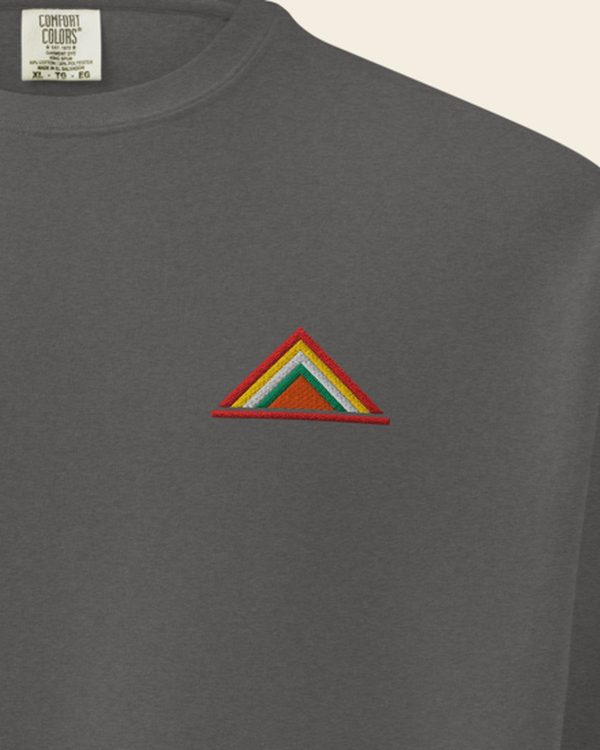
Nusf Hanbaliyyaنصف حنبلية
Half of the great hanbaliyya diamond.
The sources record no meaning for it, so we give only its name and description.
Sources: Al-Najada, Folk Culture
Pieces: Half Hanbaliyya Crewneck
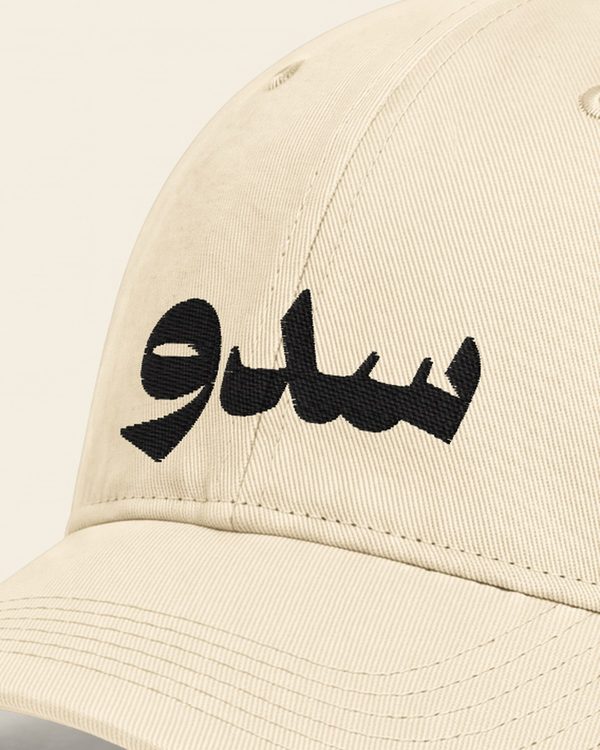
Our name
Our name, «سدو», in its letters alone with no marks; the Mithkhar diamond is our separate symbol. It is on the Wordmark Washed Cap.
The sources
- Al-Najada: Ali Saleh Al-Najada, on Bedouin and town culture in Kuwait's traditional Sadu, Folk Culture, no. 43.
- Canavan: K. Canavan, a conference paper on camels in Sadu, SOAS, 2011.
- Al-Ogayyel and Oskay: a chapter on Kuwaiti al-Sadu, Brill.
- Abu Dhabi Culture: the Al Sadu booklet and page, 2022.
- Al Rai, 30 December 2012; Al-Jazirah, 18 April 2008; Al Bayan; Emarat Al Youm; Al Riyadh, 2019.
- Encyclopedia of Crafts; AramcoWorld, 1988 and 2025.
- UNESCO: "Traditional weaving of Al Sadu", Representative List of the Intangible Cultural Heritage of Humanity, 2020, extended to Qatar in 2025.
The embroidery designs shown are original designs prepared by Sadu by miniblank, inspired by traditional Sadu motifs. They are not Sadu weaving and not handwoven products. The brand claims no right in the traditional Sadu motifs themselves; its rights are limited to its own designs. The embroidery is machine-made.