How to draw Sadu patterns on a grid, step by step
Here is how to draw Sadu patterns: it is easier than it looks if you start with squared paper. Sadu designs are geometric: triangles, diamonds and lines repeated in a regular, symmetrical rhythm, and each one can be drawn by filling in small squares as if they were stitches of the weave. Start with the bands along the edges, then the stepped triangles, then a diamond made of two triangles, and keep to a few colours: red, black and white.
Why draw Sadu patterns on a grid?
In Al Sadu the warp threads show on the face of the cloth, and every change of colour happens in a whole step, not along a smooth curve. That is why the edges of Sadu triangles look stepped like a staircase rather than slanted in a straight line. Squared paper copies this exactly: each square is a stitch and each row a step. At Sadu by miniblank we draw every sign on a grid of small squares for the same reason, before it becomes an embroidery file.
The basic shapes of Sadu patterns
Before you draw, get to know the shapes that come back again and again in Sadu, as described by the sources we gathered on The signs of Sadu:
- The triangle (Al-Muthallath): the base of most Sadu patterns.
- Al-Mithkhar: two triangles meeting on one base to make a diamond.
- Al-Uwairjan: a pattern built on the triangle.
- Al-Hubub: short alternating lines along the edge of the cloth.
- Al-Ain: white dots on a dark ground.
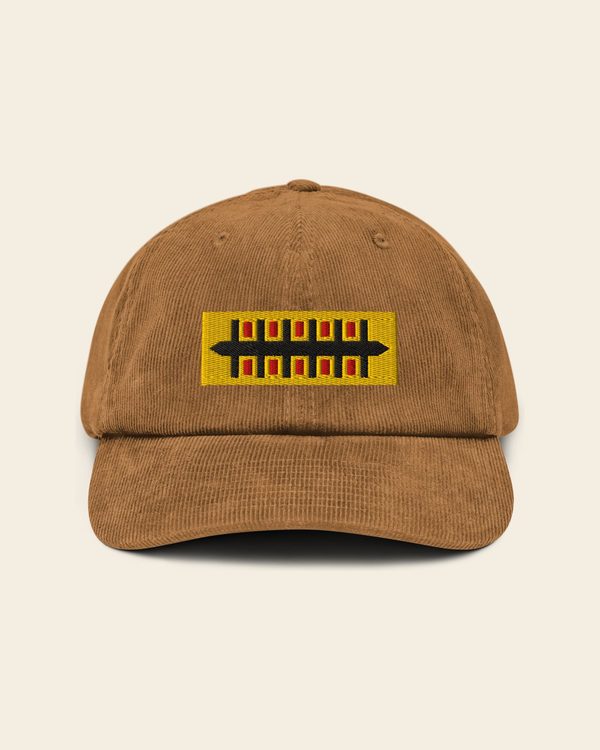
- Darb Al-Hayya: a winding line running the length of the cloth.
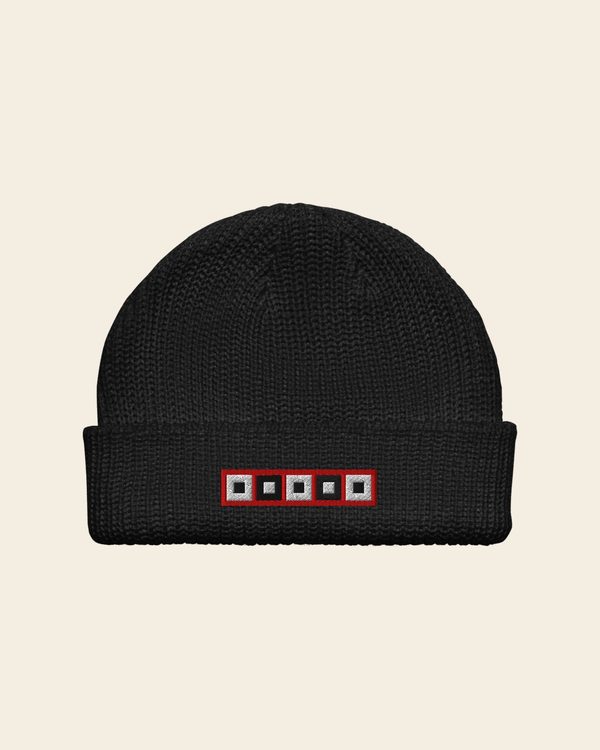
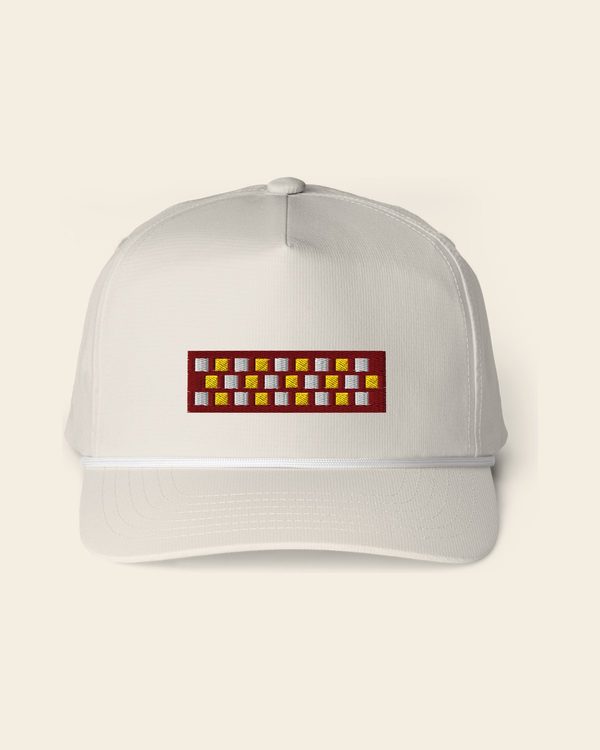
- Al-Numaila: small squares.
- Al-Sunun: a serrated edge.
The meanings of these patterns vary from weaver to weaver and from place to place, so never give a pattern a meaning without a source, and write it as "is said to".
How to draw Sadu patterns, step by step
1. Prepare the grid. Use squared paper, or draw a grid of small equal squares. Draw a long horizontal frame, because Sadu is woven in long bands.
2. Draw the edges. In the top and bottom rows, fill one square and skip one, in two alternating colours. That gives you a band like Al-Hubub framing the piece.
3. Draw a stepped triangle. Fill five squares in one row, three in the middle of the row above, then a single square at the top. That is the Sadu triangle.
4. Make a diamond. Draw a second triangle upside down below the first so their bases meet, and a diamond appears. You can leave an empty row between the two bases, as in Al-Mithkhar.
5. Repeat in rhythm. Repeat the diamond or triangle along the band at equal spacing, and mirror it so the pattern is symmetrical. Regular repetition is what makes a drawing read as Sadu.
6. Colour with few colours. Make the ground black or the colour of wool, the pattern white, and put red in bands or at the heart of the diamond. Three or four colours are enough.
Tips for students and designers
For a school project, choose one pattern and set it in a band rather than filling the page with many, because Sadu lives on calm and repetition. For a design, remember that Sadu is the craft of Bedouin women: say so when you show your work, don't give a pattern a meaning you haven't found in a source, and never use tribal marks. The meanings as the sources give them are gathered on The signs of Sadu.
Sadu patterns at Sadu by miniblank
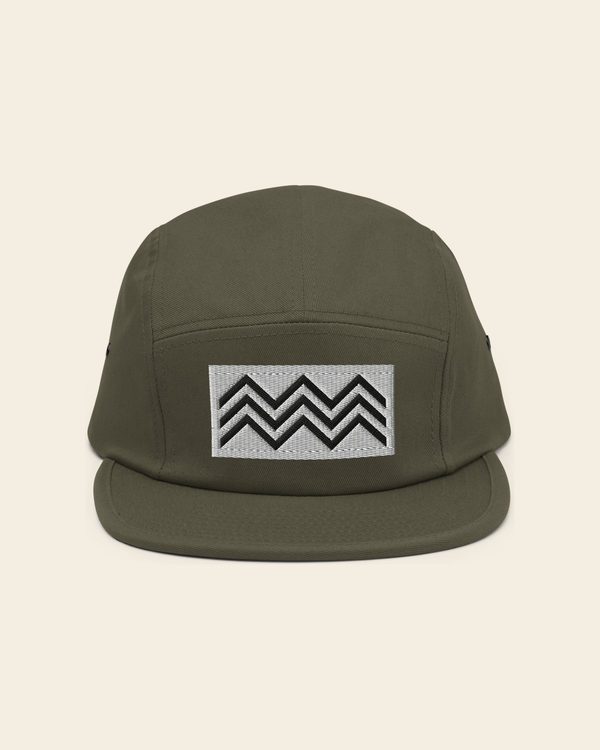
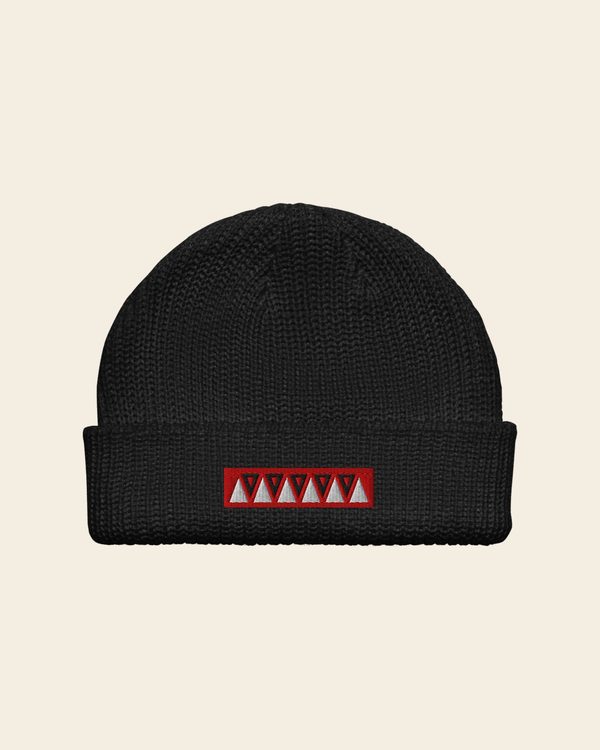
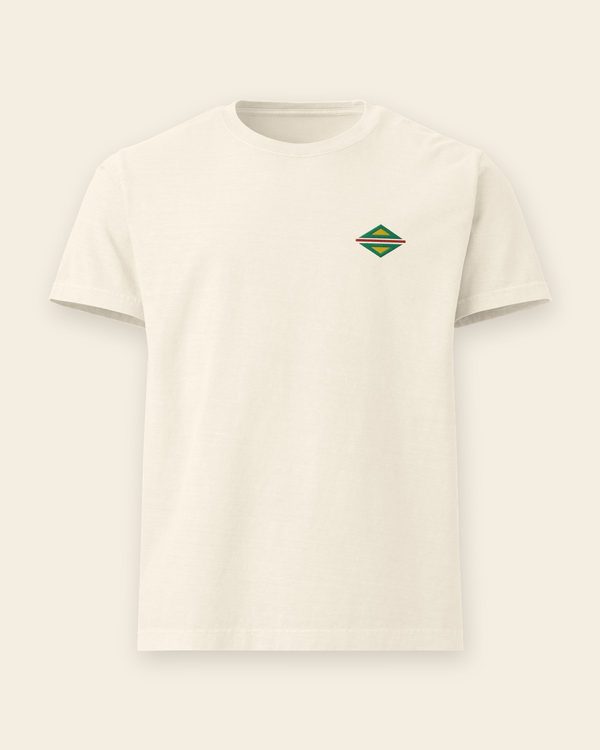
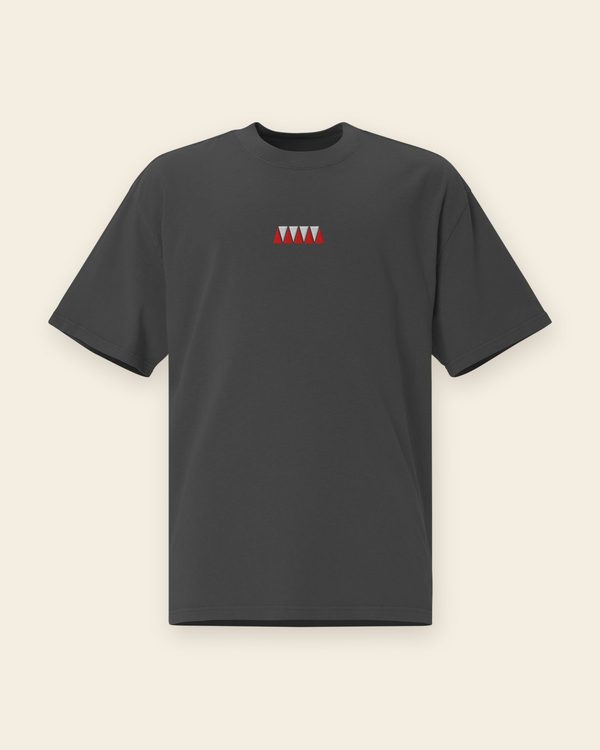
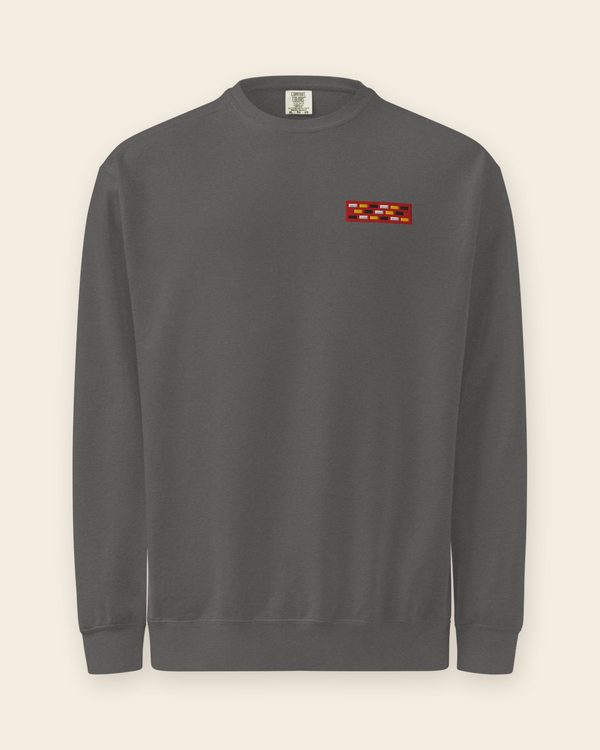
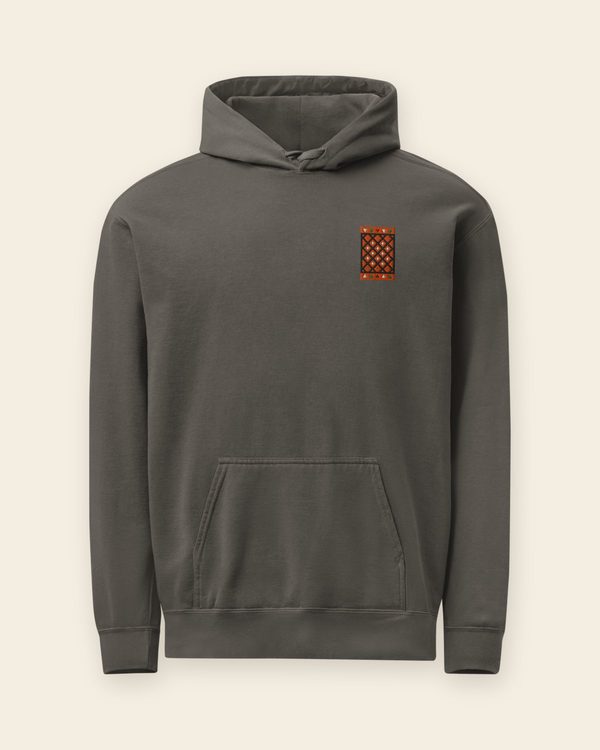
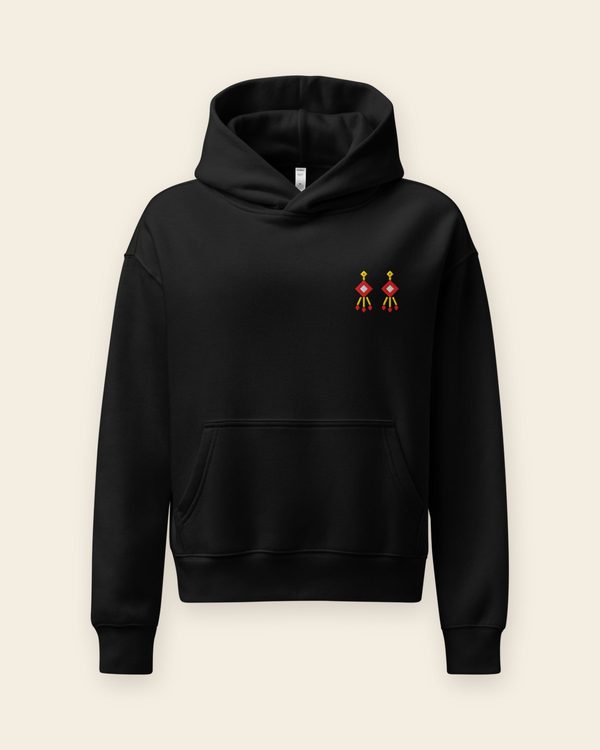
Each of our pieces carries one sign drawn this way and embroidered in its own colours: the Mithkhar Tee with its two triangles, the Uwairjan Oversized Tee, the Snake Path Five-Panel with its winding line, and the Little Ants Rope Cap with its small squares. They are Sadu-inspired machine embroidery, not weaving, made for you after you order. Find them in Headwear and all pieces.
Questions
What's the easiest way to draw Sadu patterns?
On squared paper: fill the squares row by row to make stepped triangles, join two triangles into a diamond, and repeat it along a band.
What are the basic shapes of Sadu patterns?
The triangle, the diamond made of two triangles, short alternating lines, dots, the winding line and small squares.
Which colours should I use?
Mainly red, black and white, with brown or beige. Three or four colours are enough.
Where can I find what Sadu patterns mean?
We gathered them with their sources on The signs of Sadu, written as "is said to" because they vary between weavers.