Sadu patterns on clothing: how to read the sign and choose the piece
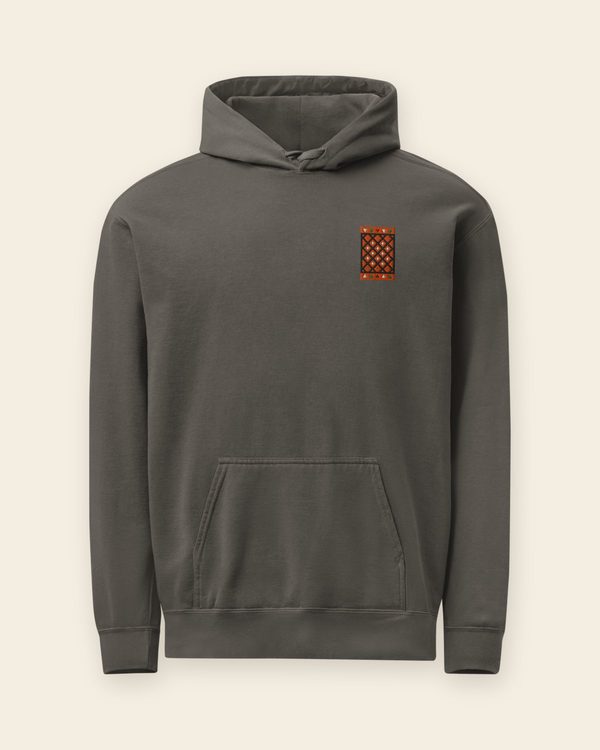
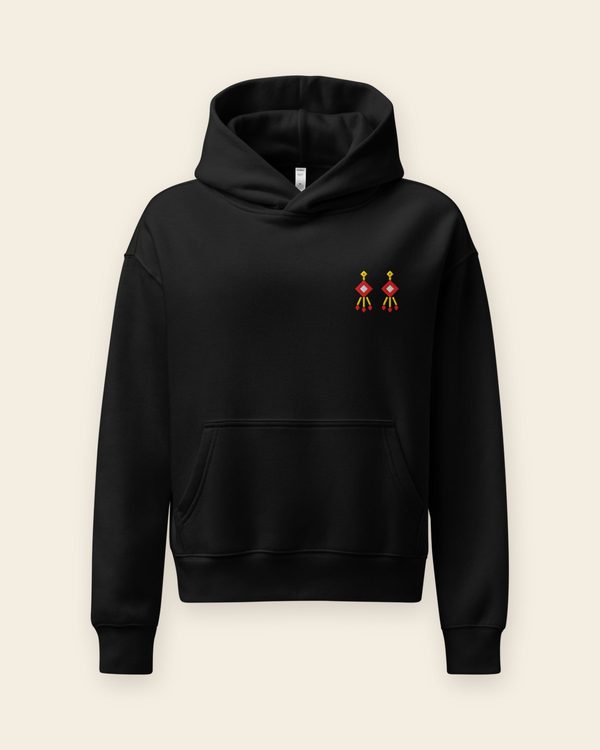
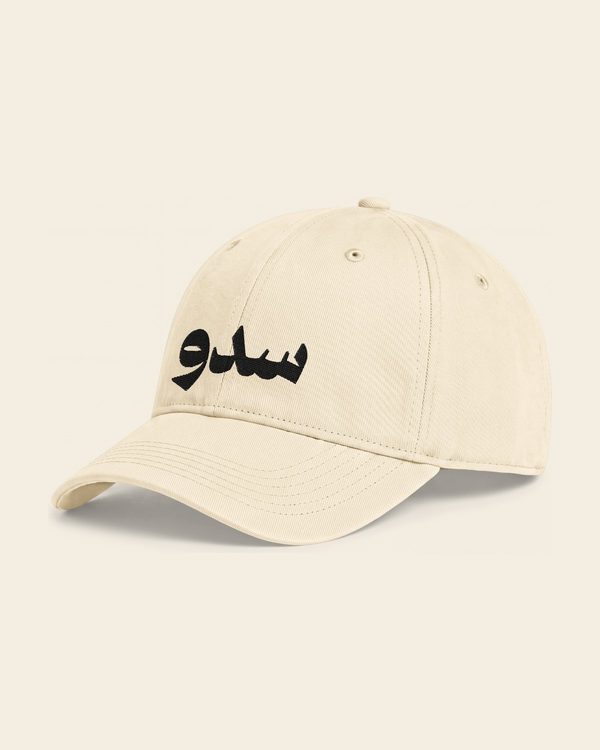
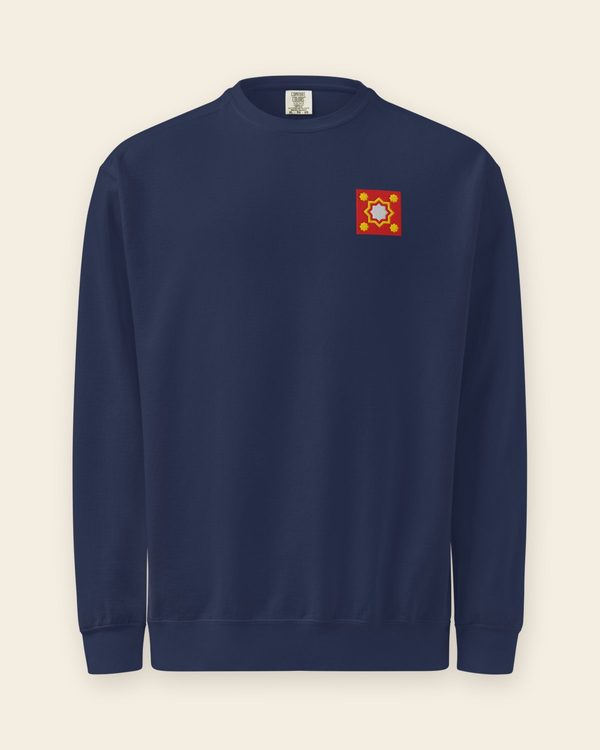
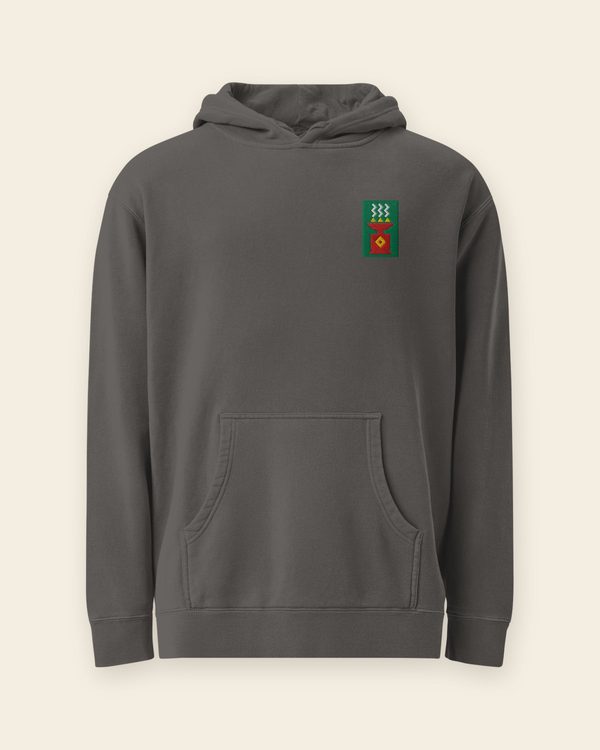
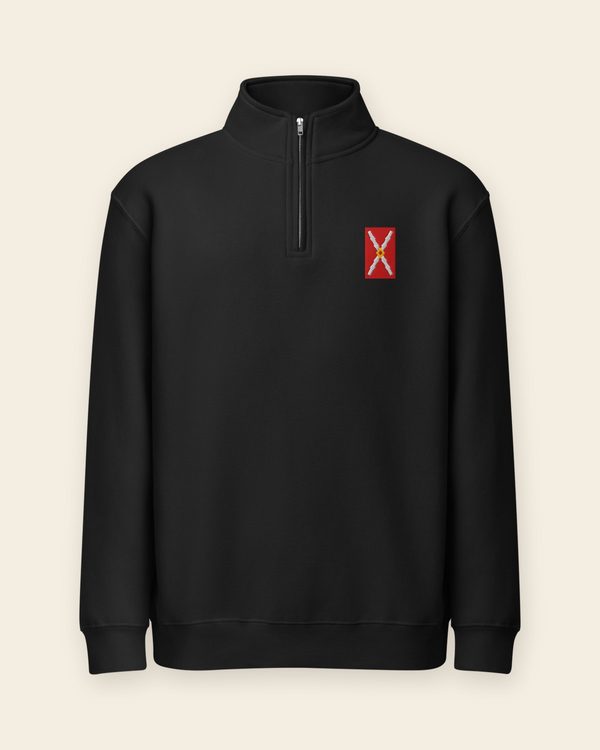
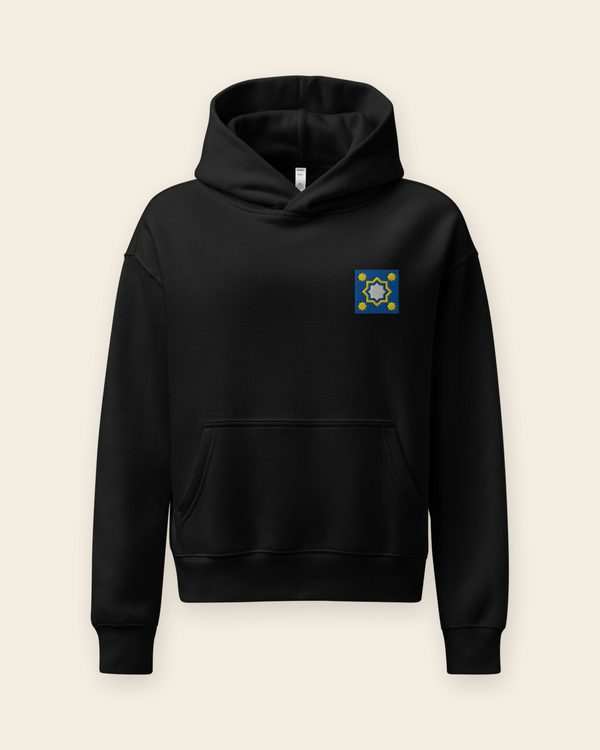
Sadu patterns on clothing take the geometric signs of the Bedouin weave, such as Al-Mithkhar, Al-Uwairjan, Al-Ain and Al-Shajarah, off the tent and the camel bag and put them on a tee, a hoodie or a cap; on our pieces each sign is drawn by us and machine-embroidered, one sign per piece, as Sadu-inspired embroidery. People search for Sadu patterns, Sadu designs and Sadu motifs because they want to know what the shapes are called and what they mean. This guide explains how a Sadu pattern is built, names the signs on our everyday pieces with what the sources say about them, and sets out the difference between woven Sadu and embroidery inspired by it.
How a Sadu pattern is built
Sadu is woven by Bedouin women on a ground loom, in long narrow strips, and the patterns come from the way the threads cross. That is why Sadu patterns are made of straight lines, triangles, diamonds and stepped edges, not curves. Bands of pattern run along the strip between plain stripes, and a weaver chooses and combines them. Our guide to how Sadu is woven explains the loom and the process.
Sadu patterns on our everyday pieces
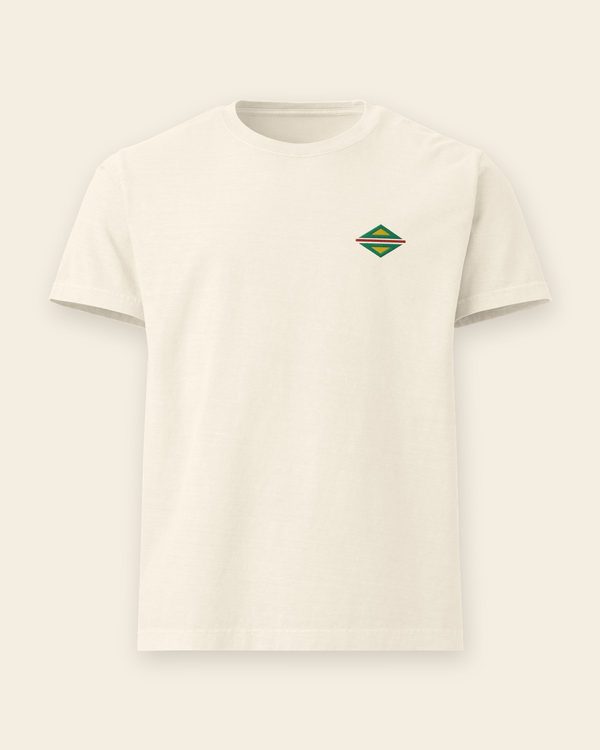
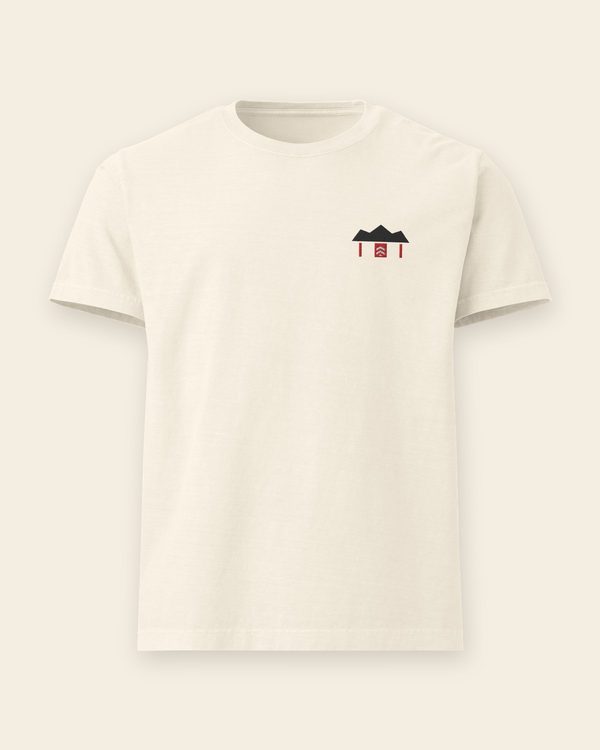
- Al-Mithkhar: one of Sadu's main traditional patterns, two triangles meeting on one base. On the tee and a corduroy cap.
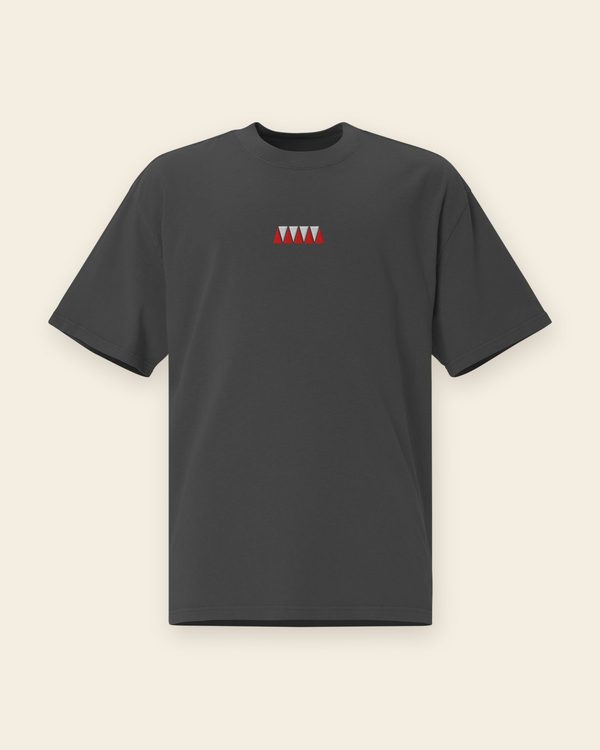
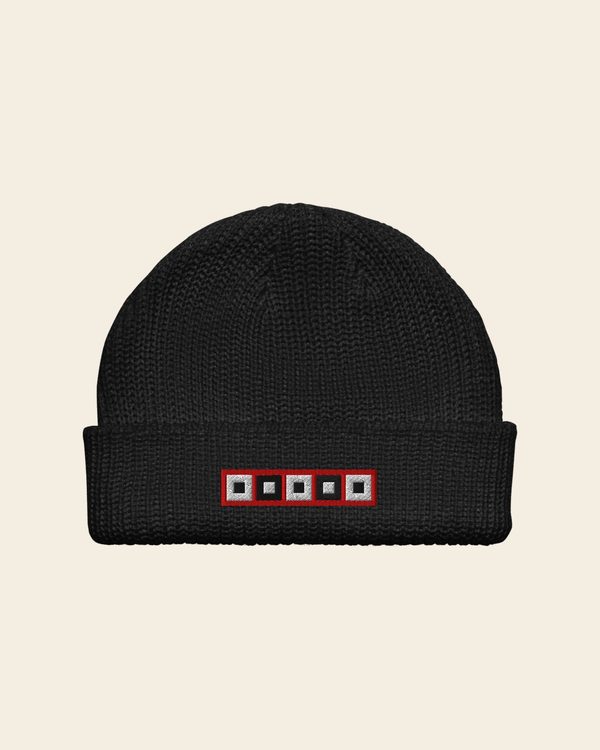
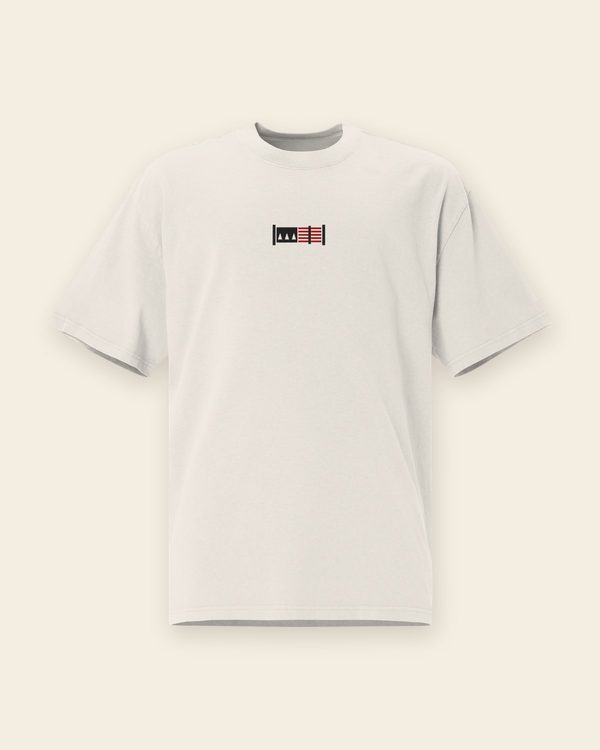
- Al-Uwairjan: one of Sadu's triangle patterns; the triangle is said to mean loftiness. On the oversized tee and a beanie.
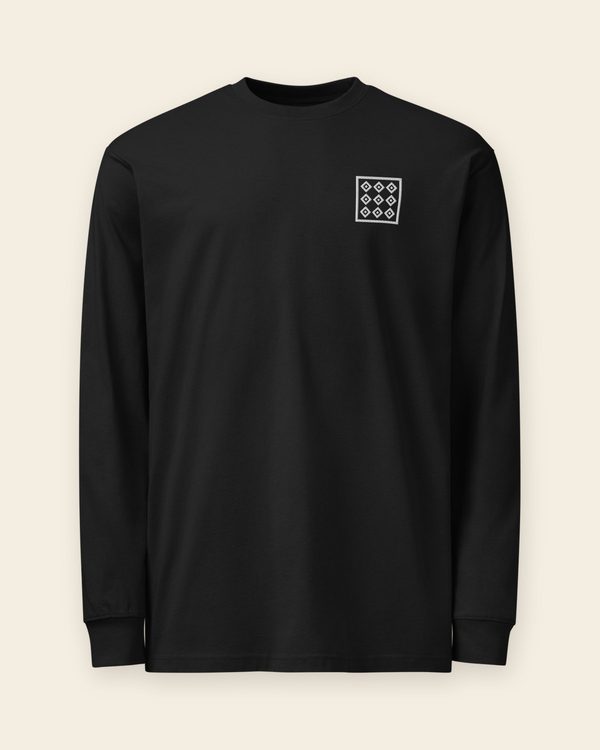
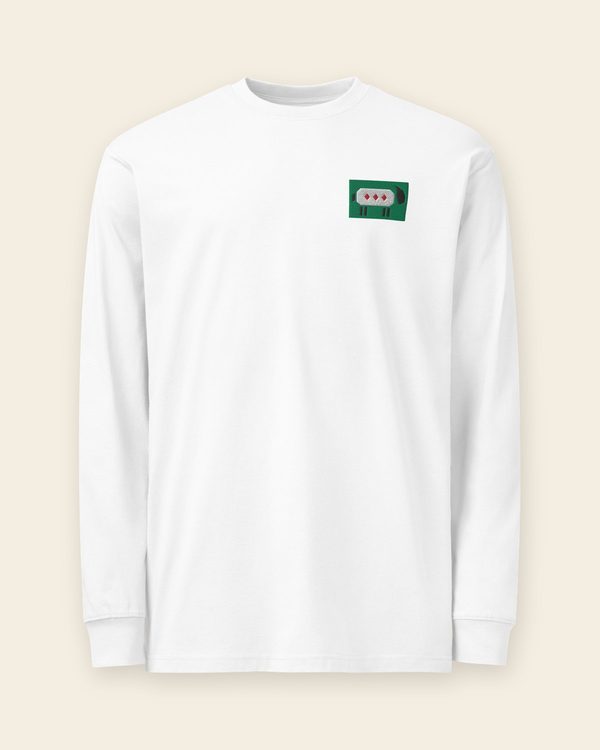
- Al-Ain: one of the main traditional patterns, white dots in the black. On the long sleeve and a rope cap.
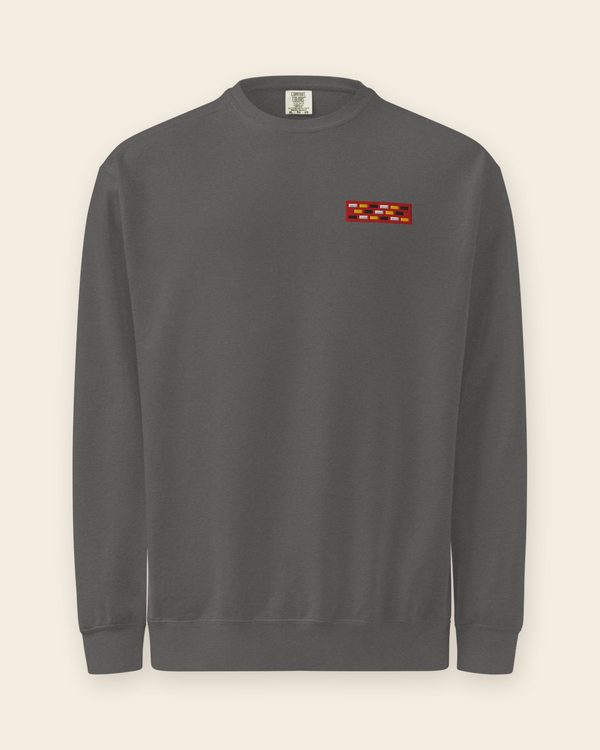
- Al-Hubub: a simple pattern of short alternating dashes on the edge. On the crewneck.
- Al-Shajarah: the tree, one of Sadu's finest and most intricate patterns, where the weaver shows her skill. On the hoodie.
- Dhurus Al-Khail: horses' molars, raised patterns that set the face of the weave apart from its back. On the beanie.
These are our Essentials, available all year. The sources for each meaning, and many more signs, are on The signs of Sadu.
Woven Sadu and Sadu-inspired embroidery
It is worth being clear. Woven Sadu is a textile: wool or goat hair, spun and dyed, then woven by hand on a ground loom, with the pattern inside the fabric. Our pieces are not that. Each one is Sadu-inspired embroidery: one sign we drew ourselves, machine-embroidered in its own colours on a ready-made garment. It is not Sadu weaving and not a hand-woven piece. We use the names of the patterns as the sources give them, and where no source gives a meaning, we say the meaning is our reading.
Seasonal signs
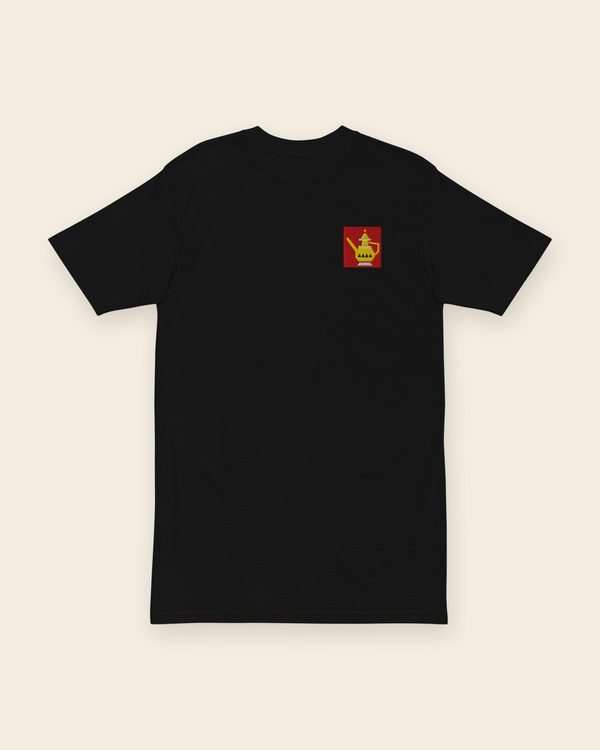
Alongside the Essentials we release signs in seasonal drops. Our Winter drop takes its signs from the black tent and the majlis: the tent, the coffee pot and the incense burner; the loom, the spindle and the sheep; the stars; and edge patterns such as Al-Musht, Darb Al-Hayya, Al-Numayla and Al-Dhal'a.
How to choose a Sadu piece
Start with the sign. Choose one whose shape you like or whose name means something to you, then the garment. A bold sign, such as Al-Shajarah, suits the wide front of a hoodie; a small repeating edge, such as Al-Hubub, sits well on a crewneck. For everyday wear, a tee or a cap is the easiest start. One sign per piece keeps it calm, so the pattern is easy to wear with a thobe, jeans or anything else.
Care for an embroidered piece
Wash cold and inside out, do not bleach, and do not iron directly over the embroidery. Dry flat or hang to dry. That keeps the thread neat and the colours bright for longer.
To learn where Sadu comes from, read What is Sadu? Each piece is made for you after you order, and its page shows the expected delivery dates, with free shipping.
Questions
What are the best-known Sadu patterns?
Among the best known are Al-Mithkhar, Al-Uwairjan, Al-Ain, Al-Raqm, Al-Shajarah and Dhurus Al-Khail. Each is listed with its source on The signs of Sadu.
Why are Sadu patterns geometric?
Because they come from the way threads cross on the ground loom, so they are built from straight lines, triangles, diamonds and stepped edges rather than curves.
Are your pieces woven Sadu?
No. Each piece is Sadu-inspired machine embroidery: one sign we drew ourselves, embroidered in its own colours. It is not Sadu weaving and not hand-woven.
How do I wash an embroidered piece?
Cold and inside out, no bleach, and do not iron directly over the embroidery.