The Bedouin black tent: how bayt al-sha'r is woven and built
Bayt al-sha'r, the house of hair, is the traditional Bedouin black tent. It was made from goat hair, sheep wool and camel hair, woven by women on the Sadu loom in long panels that were then sewn together and raised on poles. Most of the people who made these tents were women, and weaving one took from three days to a week depending on its size and the skill of its maker. Because its fibres swell in the rain, the tent kept its family dry in winter and held the warmth of the fire on cold nights.
How was the Bedouin black tent made?
It starts with the fibre. Wool and hair were cleaned and spun into yarn wound into balls called dijja, and some of it was dyed with plant colours. Then long pieces were woven on the Sadu loom, each up to about eight square metres, as Saudipedia records, and these were joined and sewn into the roof and the walls. The roof was raised on poles of tamarisk or ghada wood and held to the ground with guy ropes and pegs.
Saudipedia explains how goat hair behaves in the rain: its fibres swell in the wet season and the gaps between them close, so water doesn't get through. On cold winter nights the tent holds the heat of the hearth. That is why black goat hair stayed the first fibre of the tent, and why its colour became the tent's signature.
The parts of the black tent and their names
The tent has a roof and walls wrapped around it, and inside, the ruwaq or qati', a woven curtain dividing it into two sides: an open side for men and guests, and a closed side for women. On the men's side is the hearth, the mishab or wijar, where the Arabic coffee is made. Among the names Saudipedia gives for its parts and fittings are the poles ('umud), the guy ropes (atnab), the pegs (awtad) and the rings (halaq).
A tent is named by the number of its poles: one pole is a qutba, two a muqawran, then mithawlath, murawba', mukhawmas and musawdas as the poles increase. The name alone tells you the size of the tent, and how many guests its family can receive.
The black tent today
The tent began on the edge of town and then moved into the home itself; in many Saudi houses it is now an outdoor room in the courtyard. Many are built today on a frame of steel and tubing cut to size, covered with fabric inside and out, with lighting and decoration added, and sometimes full air conditioning. It has kept its name and its idea: a place for guests, coffee and long evenings.
If you are shopping for a Sadu tent for your home, know that hand-woven Sadu is long work made by particular weavers, and that much of what is sold under the name is fabric printed with Sadu patterns. Ask the seller about the material and how it was made before you buy.
The black tent at Sadu by miniblank
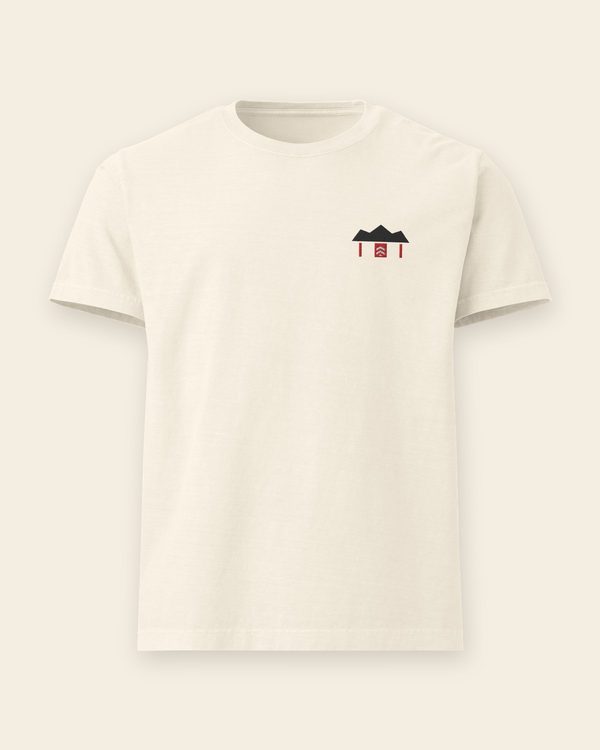
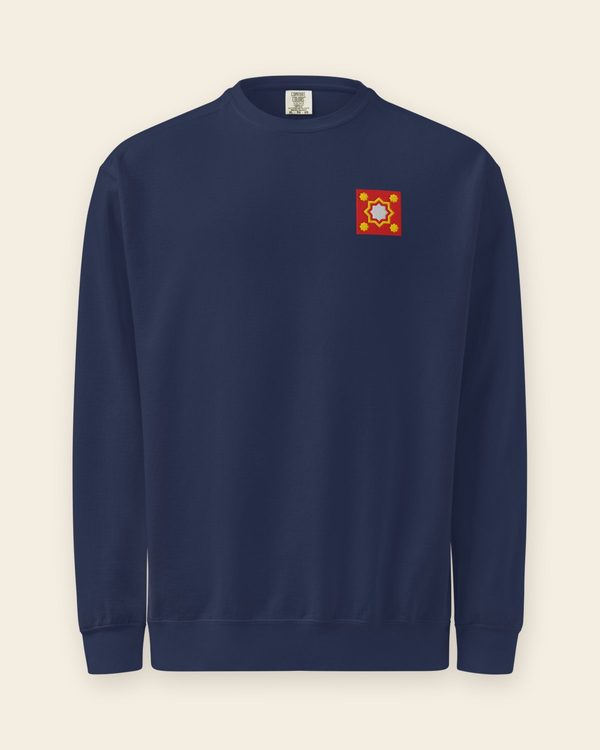
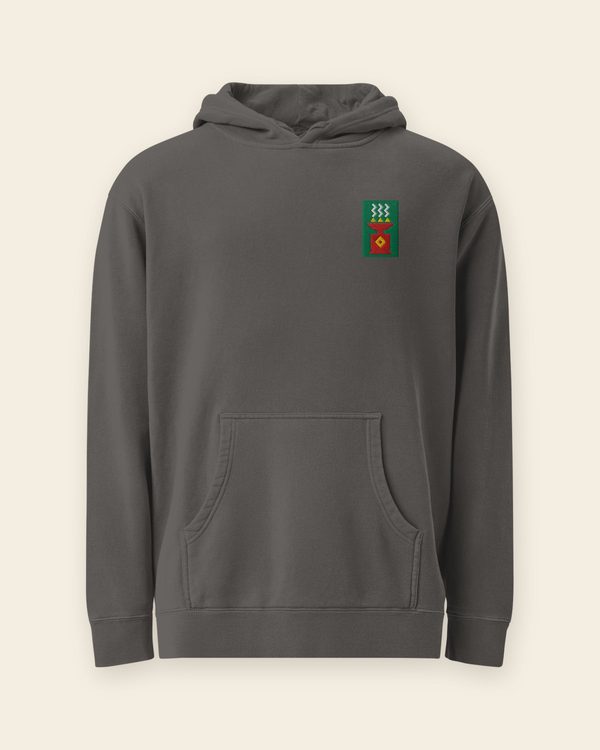
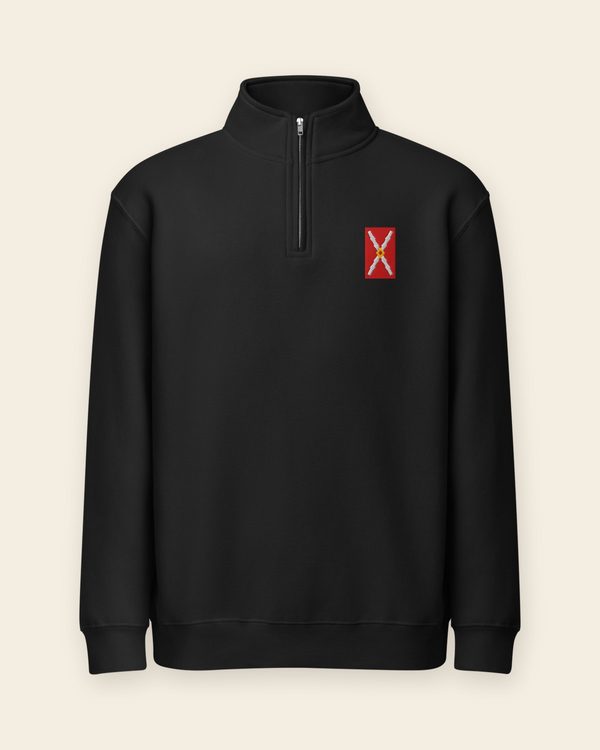
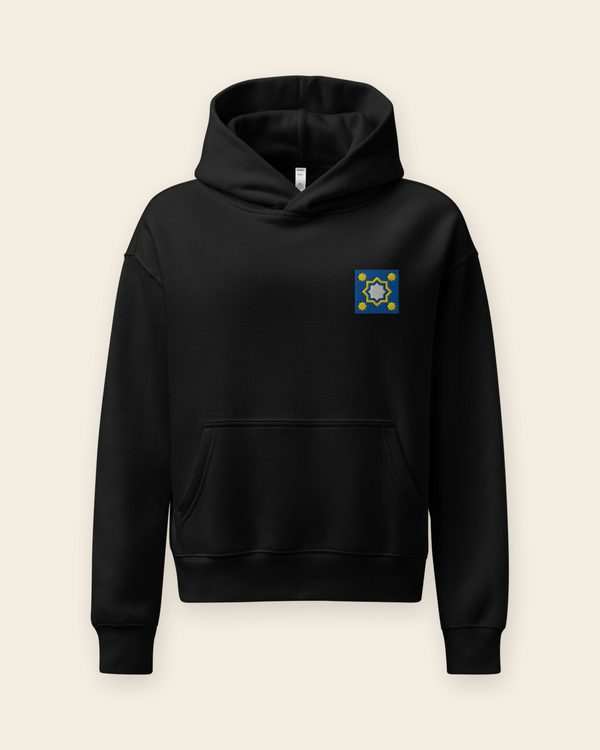
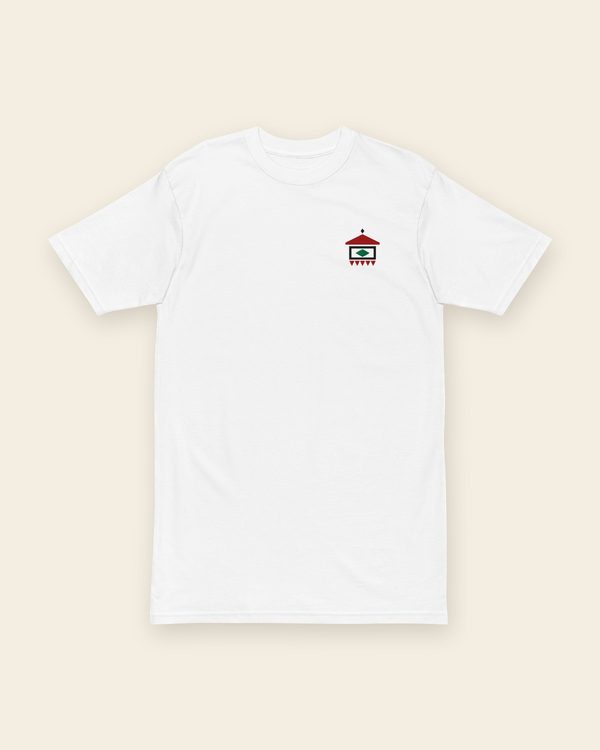
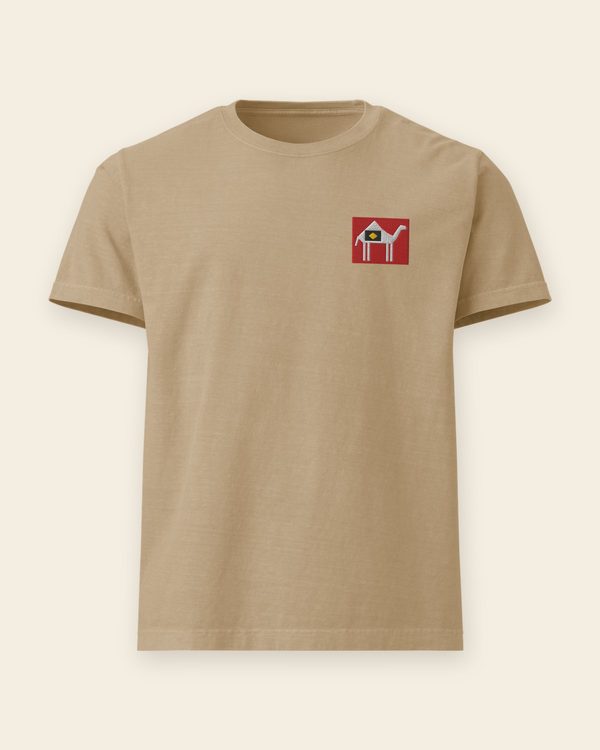
The black tent is one of the signs in our first drop. On the Black Tent Tee we drew the tent in Sadu's geometric lines, embroidered in its own colours on the chest, with its meaning as the sources give it: among the most important and largest things made from Sadu. In the same drop are the Coffee Pot Tee, for the dallah no majlis is complete without, and the Incense Burner Hoodie. They are all in Winter, the season of wool and the majlis. Every piece is Sadu-inspired embroidery, made for you after you order.
Questions
What is a Bedouin black tent made of?
Goat hair, sheep wool and camel hair, woven on the Sadu loom in long pieces that are sewn together.
Why doesn't rain get into the black tent?
Goat hair fibres swell in the rain, closing the gaps between them.
What is the ruwaq in a black tent?
A woven curtain that divides the tent into an open side for men and guests and a closed side for women.
What do mithawlath and murawba' mean?
Names for a tent by its number of poles: three for mithawlath, four for murawba'.